It’s a crisp Tuesday morning, and as I sip on my third cup of coffee (judge me all you want), I find myself lost in a rabbit hole of endless possibilities that extend beyond our current lifespan. Today, I’m ready to dig into the world of longevity and the technology that might just help us defy the natural expiry date highlighted on our genetic lottery ticket.
Introduction: We’re All in the Same Mortal Boat
Face it, we’re all a little obsessed with staying young—or at least feeling young—forever. There’s a reason why the beauty industry is a multi-billion dollar behemoth and why wellness trends seem to have no expiration date. But what if I told you the real immortality ticket isn’t in some anti-aging potion? Instead, it’s rooted in the fascinating and rapidly growing field of longevity technology.
The Genes Have It
Cracking Open the Genetic Vault
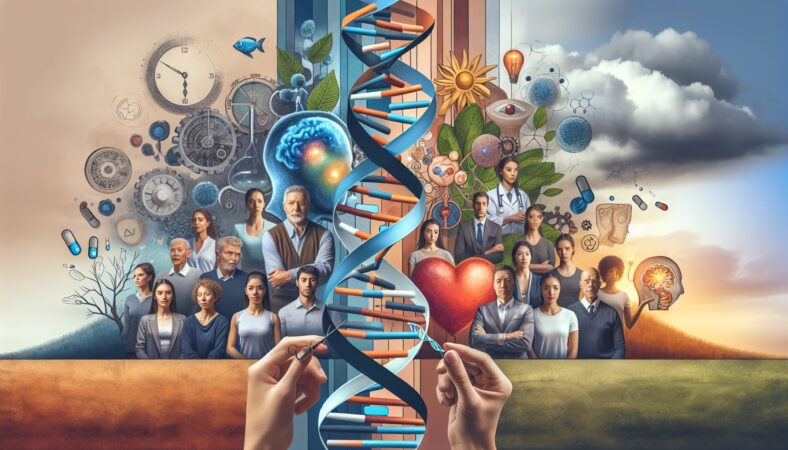
Let’s kick things off with genetics. In recent years, scientists have been eyeing our DNA strands like I eye fresh pizza—only there’s a lot more science involved, and they don’t scarf it down. Genetic engineering is proving to be the key to unlocking human longevity. CRISPR, the genetic editing tool that sounds like it’s straight out of a sci-fi novel, is helping us splice and dice our way to possibly extending our lifespans.
Geneticists are already experimenting with tweaking specific genes to fend off age-related diseases, which is a pretty big deal. Imagine a world where no one suffers from dementia because we’ve snipped that particular part of our DNA. Now, I know what you’re thinking: “Can’t we just delete the aging gene entirely?” Wouldn’t that be sweet? Well, scientists like George Church out of Harvard are on their way, experimenting with animal models to see just how far our genetic makeup can stretch without reaching its breaking point.
Chipping in: The Nanotechnology Revolution
Tiny Tech, Big Impact
Hold on, don’t hit snooze yet. Nanotechnology is stepping up to play superhero in the longevity saga. Picture tiny little robots coursing through your bloodstream like they’re on the highway in your body, fixing up tiny tears, delivering medication, or questioning nasty cells that pretend they’re a part of the club but are actually wreaking havoc.
Scientists are visionary, aren’t they? I mean, if you told me ten years ago that I’d be thanking nanorobots for preening my insides, I would probably respond with a spit-take. But here we are, on the cusp of seeing how these microscopic tools could vastly improve healthcare treatments, giving us not just longer lives, but healthier ones. Imagine how this technology could overhaul disease treatment—no more all-day hospital stays, just a quick tune-up from your nanorobotics team.
Artificial Intelligence: The Age-Defying Ally
Thinking Machines to Fight Aging
Let’s talk about everyone’s favorite buzzword—AI—and its role in this longevity revolution. Now, I get it, your brain might be tired from hearing about how AI is cooking up everything from writing songs to driving cars. But when it comes to longevity, AI is set to be the ultimate ally.
AI can analyze mountains of data about our bodies, lifestyles, and treatment outcomes faster than you can say “Artificial Intelligence.” AI-provided insights are increasingly being used to discover new drugs, evaluate clinical trial outcomes, and tailor individualized health plans. Plus, with big names in tech, like Peter Thiel and Google’s Alphabet, diving into AI-driven biotech ventures like Calico, there’s a serious amount of momentum and cash being funneled into longevity research.
The Social Ramifications: Living Longer and Better
Social Dynamics and Ethical Quandaries
But hey, let’s not skip the complexities that come with adding decades to human life. For starters, how will extending life affect social constructs? Will retirement be a thing of the past, or will we redefine what people do in their second (or third?) act of life? The fiscal makeup of society would certainly need an overhaul, considering longer lifespans would mean shifting how we plan for healthcare, jobs, and even family structure.
There are ethical problems in the mix, too. Who gets access to this life-extending technology? I mean, you don’t want to just create elite immortals while everyone else plays catch up, right? The equitable distribution of these innovations poses another layer of debate—one that technologists, ethicists, and policymakers are already scrambling to address.
Conclusion: Looking to Infinity and Beyond
A Future We Can Nearly Touch
Alright, so here’s the crux of it all—telling someone that they may live well past their century mark can sound either thrilling or downright terrifying depending on your outlook. Either way, the realm of longevity technology is spinning into a wild adventure of what it means to be human, to live longer, and to live better.
As with any emerging tech, there’s skepticism mixed with utter excitement. While we can’t say for certain that our generation will see 100 as the new 60, we’re undoubtedly taking giant leaps toward prolonging robust lifespans. From tweaking our genes to deploying AI and nanotechnology in healthcare, we’re clawing closer to cracking the ultimate code of longevity. Here’s to the forever young(er) revolution!