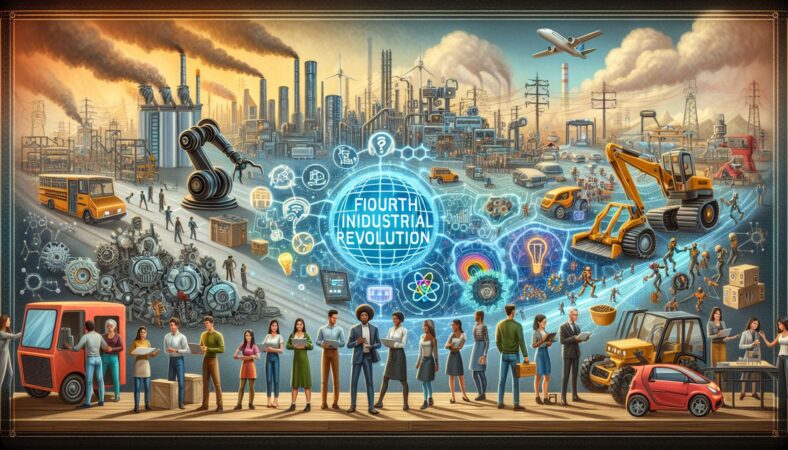
Hey, tech enthusiasts! Gather ’round, because today, we’re diving into the delightfully disruptive world of the Fourth Industrial Revolution (4IR). Whether you love it, fear it, or don’t quite know where to stand, one thing’s clear: it’s happening, and it’s happening fast. And let’s be real, who doesn’t want to imagine a future featuring self-driving cars, AI co-workers, and, hopefully, longer weekends?
What Exactly is the Fourth Industrial Revolution?
Before we go full geek-out, let’s lay some groundwork. The Fourth Industrial Revolution, or 4IR as the cool kids call it, is like the love child of the digital revolution and sci-fi dreams. It’s a fusion of technologies that blurs the lines between the physical, digital, and biological worlds. Think artificial intelligence, robotics, Internet of Things (IoT), 3D printing, quantum computing, and other tech goodies all rolled into one huge ball of innovation.
Some famous voices in tech, like Klaus Schwab from the World Economic Forum, believe that this revolution won’t just change what we do, but who we are. That might sound dramatic, but when I stopped to think about how self-replicating robots might change the job market, even I stroked my non-existent beard in deep thought.
The Key Players
AI and Machine Learning
First on the docket is Artificial Intelligence. Everyone and their grandma has heard of AI by now, thank you, Hollywood, but what’s really wild and less understood is its rate of advancement. OpenAI and Google’s DeepMind are showing how AI isn’t just performing tasks, but mastering them. Whether it’s diagnosing diseases more accurately than humans or making sure your TikTok For You page is pure dopamine paradise, AI is everywhere.
Personally, I’m enjoying watching these algorithms pull new tricks out of the hat daily. Imagine AI transforming education! Personalized learning plans for every student, designed to match unique learning styles and needs? Count me in!
Robotics Overhaul
From Boston Dynamics’ eerily agile Spot robot to your humble Roomba, robotics is reshaping industries left and right. Factories are becoming more efficient with automated workers who never clock out. Healthcare is seeing surgical assistants who, quite literally, have a steady hand.
Once, while on a factory tour, a friend told me, “You know, it’s kinda like working alongside R2-D2 minus the beeps!” And honestly, that’s exactly the vibe we’re heading toward. Who knew the future would feel so friendly?
Internet of Things (IoT): A Not-So-Distant Tomorrow
Imagine waking up to freshly brewed coffee (because, of course, your coffee maker sensed you were awake), a fridge that’s ordered groceries based on your previous cooking habits, and blinds that open automatically when it’s time to rise and shine. This interconnected utopia sounds like Tony Stark’s loft, but IoT is already making strides to turn this vision into reality.
I tried a smart home setup recently, and while it did take a moment to figure out why Alexa kept insisting on playing whale sounds, the conveniences are undeniable. Security cameras, thermostats, and even pet feeders are jumping on the bandwagon. IoT is living proof that sometimes, technology really knows best.
3D Printing’s Limitless Potential
If you’re not excited about 3D printing, you’re missing out, my friends! Whether it’s creating affordable housing or custom prosthetics for those in need, the innovation within this sphere is honestly inspiring. A few months ago, I witnessed a 3D-printed violin that played as beautifully as it looked, an elegant fusion of art and tech.
Consider this: Communities in remote locations could one day print necessary supplies, such as tools or even organs, on demand. The humanitarian and practical implications are staggering and hopeful.
The Pros and Cons: Dream or Dystopia?
Of course, as with any monumental revolution, there are hurdles, concerns, and “what the heck” moments. Will automation lead to massive unemployment? How do we make sure ethical standards in AI? What about the privacy concerns with IoT? These questions aren’t just valid, they’re important to address.
But let’s not get too catastrophic just yet. Every previous industrial revolution from steam and mechanization to electricity and computers was met with its fair share of skeptics and naysayers. Jobs evolved, industries adapted, and societies transformed, sometimes messily, but usually for the better.
Remember when the internet was dismissed as a passing fad? Exactly. Let’s think about adaptability and retraining rather than resistance.
What the Future Might Hold
So, where do we go from here? Some might say we’re speeding towards a tech utopia with boundless potential, while others caution toward the responsibilities that come with such power. Personally, I envision a future where creativity, empathy, and human connection are prioritized, jobs transformed rather than lost, improved by tools that allow us to do more of what truly matters.
In the coming years, expect to see tech that brings radical changes in sustainability. Imagine cities powered exclusively by renewable resources using AI-optimized systems or agriculture supported by automated drones for precision farming. Environmental consciousness woven tightly into every aspect of innovation. We’ll have robots that can dive to clean ocean beds and drones planting trees where humans can’t reach.
Friends, fasten your seatbelts, we’re in for a wild ride! The Fourth Industrial Revolution is here, and like all great transformations, it’s a thrilling mix of challenges and possibilities. Stick with me, and let’s navigate this extraordinary new world together. What are your thoughts or dreams about 4IR? Flash forward a decade, what do you see? I’m eager to know, and as always, I’ll keep you posted.
Until next time, curious minds!