The House of Cards Finally Tumbles
Picture this: you’re standing in a pristine white gallery, admiring what you believe is a genuine Jean-Michel Basquiat. The paint application screams authenticity. The composition hits those familiar notes of urban poetry and raw energy. Then a scientist walks in with a spectrometer and tells you the titanium white in that brushstroke wasn’t even invented when Basquiat was alive.
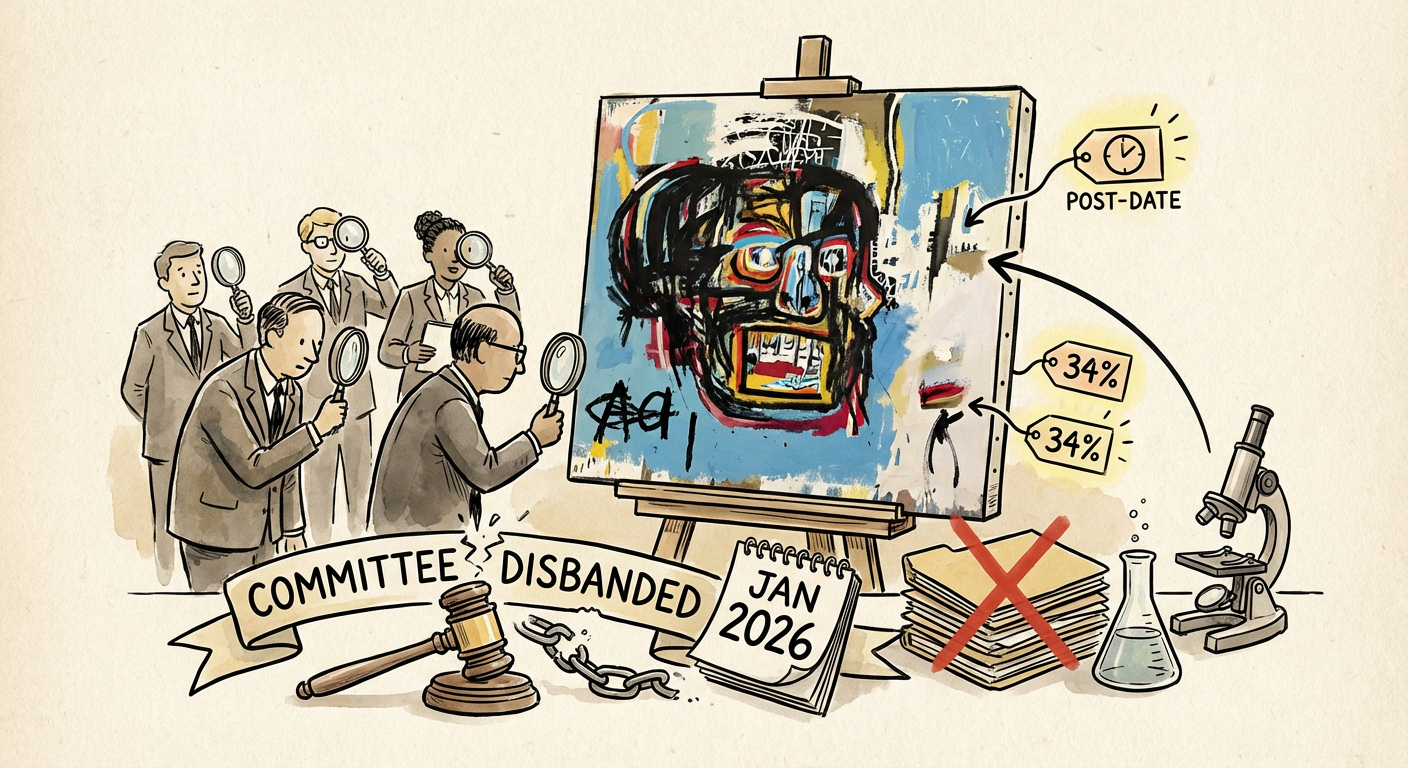
This exact scenario played out 18 times when Dr. Elena Rodriguez conducted her spectroscopic analysis of supposedly authenticated Basquiat works. Her findings revealed titanium white pigments in paintings that predated the commercial availability of this specific formulation by five years. Basquiat died in 1988. These pigments hit the market in 1993.
The Basquiat Authentication Committee, that once-revered gatekeeping body, disbanded this January after forensic analysis exposed a staggering truth: 34% of their authenticated works contained materials that couldn’t have existed during the artist’s lifetime. We’re not talking about questionable provenance or stylistic debates. We’re talking about paint that literally didn’t exist.
When Sotheby’s Hits the Brakes
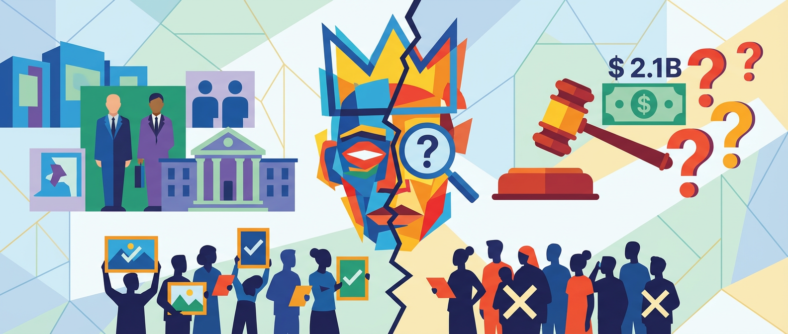
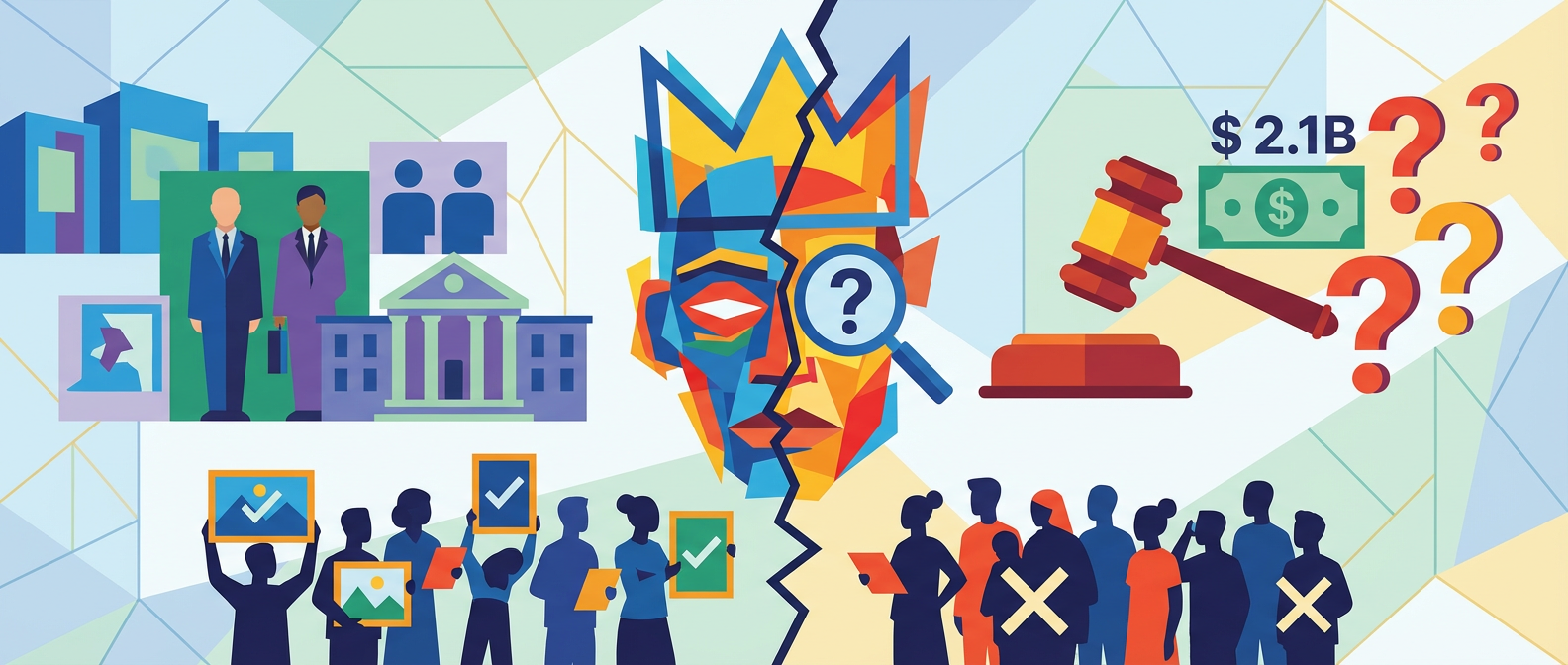
The ripple effects hit the auction houses hard. Sotheby’s suspended sales of 127 Basquiat pieces worth approximately $2.1 billion while they scramble to develop new authentication protocols. Think about that number for a moment. We’re looking at enough money to fund a small country’s arts budget, suddenly frozen in legal limbo.
This isn’t just about embarrassment or professional reputation. When an auction house pulls $2.1 billion worth of inventory, collectors start asking uncomfortable questions about every other piece hanging on their walls. The Basquiat Estate Official Statement reads like a declaration of war against fraudulent dealers, and rightfully so.
Insurance companies felt the immediate impact. Claims related to Basquiat forgeries reached $847 million in 2025, representing a 340% increase from the previous year. These aren’t small-scale disputes over attribution. These are massive financial reckonings that reshape how the art market operates.
The Science Behind the Scandal
Here’s where it gets fascinating from a technical standpoint. Modern authentication technology has evolved far beyond the trained eye and stylistic analysis. Today’s forensic art examination reads like a CSI episode, but instead of solving murders, scientists are solving million-dollar mysteries.
Rodriguez’s spectroscopic work is just one tool in an increasingly sophisticated arsenal. These machines can identify specific paint formulations, analyze canvas fibers, and even detect the age of materials down to the decade. When you understand that Basquiat often worked with whatever materials he could find, the presence of consistently high-end, period-inappropriate pigments becomes a glaring red flag.
The Art Authentication Technology Report details how machine learning algorithms now cross-reference brushstroke patterns, paint application techniques, and material composition to create authentication profiles that are incredibly difficult to fake. The forgers who succeeded in fooling experts for years suddenly find themselves outmatched by machines that never get tired or influenced by market pressure.
The Gallery Wars Begin
The estate’s response has been swift and merciless. Lawsuits against 23 galleries across New York and London signal a fundamental shift in how authentication disputes will be handled going forward. These aren’t gentle requests for reconsideration. These are aggressive legal challenges targeting galleries that sold works with fraudulent provenance documentation.
What makes this particularly interesting is how it exposes the complex web of relationships that prop up the art market. Gallery owners who might have genuinely believed in their pieces now find themselves caught between aggressive legal action and their own reputations. Some undoubtedly knew exactly what they were selling. Others may have been victims of sophisticated fraud operations that fooled even seasoned experts.
The geographic spread of these lawsuits tells its own story. New York and London are the twin powerhouses of the global art market. When fraud penetrates these markets at this scale, it suggests systematic problems that go far beyond individual bad actors.
What This Means for Everyone Else
If you think this only affects millionaire collectors and white-glove auction houses, think again. This scandal reshapes how we understand authenticity in art, period. Every authentication decision made before these scientific advances now carries a question mark. Every certificate of authenticity becomes a historical document rather than a guarantee.
For emerging artists, this creates both challenges and opportunities. The new authentication protocols will likely become standard practice, meaning documentation and provenance tracking start the moment an artist creates a piece. But it also means that genuine work by established artists may become even more valuable as the fakes get systematically identified and removed from circulation.
The broader implications extend to how we teach art history and appreciation. When a significant percentage of works attributed to a major artist turn out to be fake, it changes our understanding of that artist’s output, evolution, and influence. Suddenly, scholarly papers need revision. Exhibition catalogs require asterisks. The entire narrative shifts.
This story isn’t ending anytime soon. As authentication technology continues advancing and more forensic analysis gets completed, we’re likely to see similar revelations across other high-value artists. The question isn’t whether more scandals will emerge, but which artist’s authentication committee will be the next to face the music. What do you think happens when this level of scientific scrutiny gets applied to other market darlings?