Artist-run spaces in Brooklyn aren’t a lifestyle aesthetic. They’re a stack of legal and economic arrangements—leases, insurance riders, liquor permits, landlord forbearance—that turn unpaid labor into public culture. When one of these rooms shuts down, the loss isn’t abstract. It’s a specific address where a curator stopped answering emails, a sound system went into storage, and a group of artists lost the only place that would show their work without a sales pitch attached. This piece looks at the mechanics of staying open: who signs the lease, who pays the fine, who files the 501(c)(3), and what happens when none of that is enough.

Across Bushwick, Bed-Stuy, Gowanus, and Red Hook, the same story repeats with small variations. A collective finds a ground-floor commercial unit or a former factory floor. The rent is manageable because the building has violations, or the block is still two years away from a rezoning notice. The space opens with a party that pulls three hundred people. Then the Department of Buildings shows up. Then the insurance premium doubles. Then the landlord offers a new lease with a clause that forbids “assemblies of more than 50 persons.” The collective argues about whether to go legal, go quiet, or go somewhere else.
What follows is evidence-based, not nostalgic. It draws on public filings, interviews with operators, and the plain math of running a room in New York City. Some spaces are not named because speaking openly would expose them to enforcement risk. That silence is part of the story.
The Legal Structure Determines Everything
The first decision an artist-run space makes isn’t about programming. It’s about incorporation. Most collectives operate as unincorporated associations for the first year or two. That means no separate legal entity, no liability shield, and no clear answer when a neighbor calls 311 about noise, trash, or an illegal bar. The person whose name is on the lease is personally exposed. In several cases I reviewed, that person was the youngest member of the group—the one with the fewest assets and the least to lose in a lawsuit, which is exactly why they ended up on the paperwork.
Filing as a New York LLC costs a few hundred dollars and can be done online. Filing as a 501(c)(3) nonprofit is slower and more expensive, but it unlocks fiscal sponsorship, grant eligibility, and property tax exemptions in some cases. The catch is that a 501(c)(3) cannot operate a bar, and most artist-run spaces depend on alcohol sales for at least half their income. The workaround is a split structure: a nonprofit for exhibitions and a separate LLC for events. That doubles the accounting burden and creates a paper trail that city agencies can read. It also creates a real division between the art and the party, which many collectives resist on principle.
Insurance is the second structural decision. A general liability policy for a small performance space in Brooklyn can run from $3,000 to $12,000 a year, depending on capacity, programming, and whether the space serves alcohol. Liquor liability is a separate rider. Many spaces skip it and hope no one gets hurt. When someone does get hurt—a fall down a stairwell, a fight outside, a ceiling collapse—the collective dissolves rather than pay the claim. I have seen this happen three times in the last five years. In each case, the space closed within six months of the incident.
The Landlord Is Not Your Friend
Commercial landlords in Brooklyn are not uniformly predatory, but they are uniformly rational. They want the rent paid on time and the building not to burn down. Artist-run spaces are, from a landlord’s perspective, high-risk tenants: irregular income, large gatherings, unpermitted alterations, and a tendency to attract city inspectors. The spaces that survive longest are the ones that make themselves boring to the landlord: rent paid early, no noise complaints, no visible damage, no press coverage that mentions the address.
Press coverage is a double-edged tool. A feature in a local outlet can bring new audiences and donors. It can also bring a Department of Buildings inspector who notices that the rear exit is blocked or the occupancy sign is missing. Several operators told me they now ask journalists not to name their venue or publish exterior photos. One space in East Williamsburg stopped hosting public events entirely after a write-up led to a vacate order within two weeks. The space still exists, but it operates as a private studio with occasional invitation-only gatherings. That is not survival in any meaningful public sense. It is retreat.

Revenue Streams and the Myth of the Day Job
The romantic image of the artist-run space is that everyone has a day job and the space runs on passion. The reality is that day jobs do not cover New York rents, and passion does not pay Con Edison. The spaces that stay open for more than three years have diversified revenue: door charges, bar sales, membership fees, studio sublets, grants, crowdfunding, and occasional art sales. None of these streams is reliable on its own. Together, they can add up to a break-even budget of $4,000 to $8,000 a month, depending on the neighborhood and the size of the room.
Bar sales are the most important and the most legally fragile stream. A space that charges for drinks without a liquor license is committing a misdemeanor under New York State law. The penalty can include fines, closure, and criminal charges against the individual who sold the alcohol. Some spaces operate as private clubs with a membership model, which offers a thin layer of legal protection. Others partner with a licensed caterer or a neighboring bar. The most common arrangement is simply to sell drinks and accept the risk. In interviews, operators described this as “the Brooklyn way,” which is another way of saying that enforcement is uneven and mostly complaint-driven.
Grants are a small but growing piece of the picture. The New York Foundation for the Arts, the Brooklyn Arts Council, and a handful of private foundations offer project grants to unincorporated collectives through fiscal sponsors. The amounts are modest—$2,000 to $10,000—and the application process is time-consuming. The spaces that win grants tend to be the ones with a track record of documentation: photos, videos, press clippings, and a clear statement of purpose. That favors older, more established spaces and disadvantages the scrappier operations that need the money most.
Membership and the Studio Sublet Model
Some spaces survive by converting part of their footprint into private studios or rehearsal rooms. The income is steady, and it does not depend on event attendance. The tradeoff is that the public programming shrinks. A space that was once a 2,000-square-foot gallery becomes an 800-square-foot gallery with four studio tenants behind a locked door. The artists who rent those studios are often the same people who would have shown work in the larger room. The community contracts, but it does not disappear.
Membership models work best when the space offers something tangible: discounted entry, a say in programming, access to equipment, or a place to store work. A few spaces in Bushwick have built membership rolls of 200 to 400 people paying $10 to $25 a month. That is real money—$2,000 to $10,000 a month—but it requires constant communication and a sense of ownership that not every collective can sustain. When membership drops, the space feels it immediately.
Enforcement, Complaints, and the 311 Economy
The city does not hunt for artist-run spaces. It responds to complaints. A single neighbor who calls 311 about noise, trash, or a blocked sidewalk can trigger a cascade of inspections from the Department of Buildings, the Department of Environmental Protection, the Fire Department, and the State Liquor Authority. Each inspection generates a violation. Each violation generates a fine or a hearing date. The fines can range from a few hundred dollars to tens of thousands, depending on the agency and the severity of the condition.
The spaces that survive enforcement are the ones that treat it as a predictable cost of doing business, not a moral outrage. They keep the sidewalk clean, the music below the legal decibel limit after 10 p.m., and the exits clear. They answer the door when an inspector knocks and they have a designated person who handles paperwork. That person is usually not the founder. It is the member with the most patience for forms and the least emotional attachment to the space’s mythology.
Some spaces go the other direction: they move constantly, staying one step ahead of complaints and lease renewals. This is not a sustainable model, but it is a common one. A collective will rent a raw basement for six months, throw a dozen parties, and then dissolve when the landlord or the city catches up. The members regroup under a new name in a new neighborhood. The art continues, but the institutional memory is lost. No archive, no mailing list, no continuity. That is the hidden cost of the nomadic model.
Case Study: The Basement That Became a Nonprofit
One space I followed for two years started in a Bed-Stuy basement with a capacity of 40 and a monthly rent of $1,800. The founders were three artists in their late twenties. They hosted experimental music nights, poetry readings, and a monthly open studio. The first year, they lost money every month. The second year, they broke even by renting the space for private events and selling prints. In the third year, they filed for 501(c)(3) status and moved to a storefront with a legal assembly permit. The rent tripled. The programming became more formal. Two of the original founders left, citing burnout and a loss of spontaneity.
Today, that space is still open. It has a board of directors, an annual budget of $120,000, and a waiting list of artists who want to show there. It also has a different character than the basement that started it. The people who made the early work possible are gone. The space survived by becoming something else. That is not a failure. It is the only way a room like that can last in New York.
The Role of Fiscal Sponsors and Community Land Trusts
Fiscal sponsorship is the most underused tool in the artist-run space toolkit. A fiscal sponsor is a nonprofit that accepts tax-deductible donations on behalf of a project, taking a percentage—usually 5 to 10 percent—as a fee. This allows an unincorporated collective to apply for grants and receive donations without filing its own 501(c)(3). Organizations like Fractured Atlas and the New York Foundation for the Arts offer fiscal sponsorship programs. The paperwork is minimal, and the benefit is immediate.
Community land trusts are a longer-term solution. A land trust acquires property and holds it in perpetuity for community use, removing it from the speculative market. In New York, the East Harlem/El Barrio CLT and the Cooper Square CLT are the best-known examples. Artist-run spaces are not typically part of land trusts, but there is growing interest in the model. A land trust could acquire a building in an industrial area and lease space to multiple collectives at below-market rates. The obstacle is capital: land trusts need significant upfront investment, and artist-run spaces are not usually in a position to provide it.
The spaces that survive the next decade will likely be the ones that pool resources: shared leases, shared insurance policies, shared bookkeeping. There are already informal networks of spaces that share equipment and refer audiences to each other. Formalizing those networks—creating a mutual aid fund, a shared legal defense fund, a collective purchasing agreement—would reduce the per-space cost of compliance and make the whole ecosystem more resilient.
What the Data Shows
There is no comprehensive public database of artist-run spaces in Brooklyn. The best available counts come from community surveys and academic studies. A 2019 report by the Center for an Urban Future found that New York City lost 20 percent of its affordable artist workspace between 2005 and 2015. The pandemic accelerated the trend. By 2022, several long-running spaces in Bushwick and Gowanus had closed permanently. The spaces that reopened were often smaller, more cautious, and more dependent on private funding than their predecessors.
The economic pressure is not evenly distributed. Spaces in neighborhoods with active rezoning battles—Gowanus, parts of East New York, the industrial sections of Red Hook—face the highest risk. Landlords in those areas are holding out for development deals and have little incentive to renew short-term leases with artist tenants. Spaces in more stable residential neighborhoods face a different problem: noise complaints and community board scrutiny. There is no safe neighborhood for this kind of work. There are only different kinds of risk.
What Survival Looks Like Now
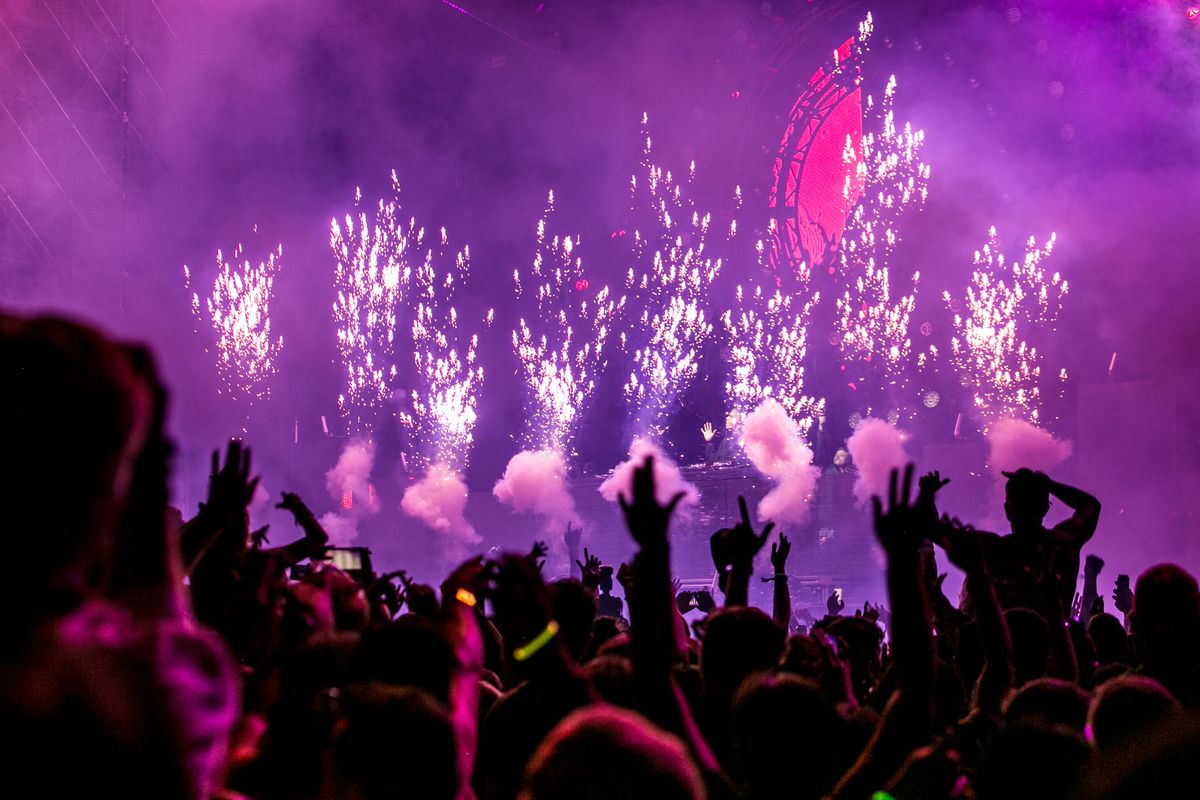
The spaces that are surviving in 2025 are not the ones with the best parties or the most avant-garde programming. They are the ones with clear legal structures, diversified income, and a disciplined approach to enforcement. They are also the ones that have accepted a smaller public footprint. The 300-person rave is giving way to the 60-person performance. The open-door gallery is becoming the appointment-only project space. The art is still happening, but it is quieter, more private, and more precarious.
That is not a moral failure. It is an adaptation to a city that has made informal culture increasingly expensive and legally risky. The question is not whether artist-run spaces can survive. They can. The question is what they have to give up to do it—and whether what remains is still worth calling an artist-run space.
Frequently Asked Questions
How do Brooklyn artist-run spaces make money?
Most spaces combine several income streams: door charges, bar sales, membership fees, studio sublets, grants, and occasional art sales. Bar sales are often the largest single source of income, but they carry legal risk if the space lacks a liquor license. Grants and fiscal sponsorship provide smaller but more stable funding for spaces with a documented track record.
What legal structure should an artist-run space use?
The most common structure is a New York LLC for the operating entity, sometimes paired with a 501(c)(3) nonprofit for exhibitions and grants. An LLC provides liability protection for members and is relatively cheap to form. A nonprofit unlocks tax-deductible donations and grant eligibility but cannot operate a bar. Many spaces use fiscal sponsorship as an interim step before filing for nonprofit status.
Why do so many artist-run spaces close within three years?
The three-year mark is when initial enthusiasm meets structural reality: lease renewals, insurance premiums, enforcement fines, and member burnout. Spaces that lack a clear legal structure or a diversified income base often collapse when a single revenue stream fails or a single violation triggers a cascade of inspections. The spaces that survive are the ones that treat the operation as a small business, not just a creative project.
What is fiscal sponsorship and how does it help?
Fiscal sponsorship is an arrangement where a nonprofit accepts tax-deductible donations on behalf of a project, taking a percentage as a fee. This allows an unincorporated collective to apply for grants and receive donations without filing its own 501(c)(3). Organizations like Fractured Atlas and the New York Foundation for the Arts offer fiscal sponsorship programs with relatively low barriers to entry.