Author: Joy Alvarez

Venice 2026 and the Ghost of ‘Stranieri Ovunque’: How One Curator’s Vision Permanently Altered Who Gets to Represent Nations

The Year Everything Changed at the Lagoon

Adriano Pedrosa stepped into the role of Venice Biennale curator in 2024 and did something that felt almost radical in its simplicity: he listened. Not to the usual institutional voices. Not to the established gatekeepers who’d been whispering the same names into the same ears for decades. He listened to artists, particularly those whose work had been systematically excluded from one of the art world’s most visible stages. The result was an edition titled “Stranieri Ovunque” – Foreigners Everywhere – and it cracked something open that doesn’t close easily.

Pedrosa’s appointment carried real weight as the first Latin American curator to helm the Biennale in its 130-year existence. That detail matters. It wasn’t performative diversity; it was a structural shift in power. And it fundamentally altered what the Venice Biennale could become in 2026 and beyond.

331 Artists, 86% Making Their Debut: The Numbers That Tell a Story

The 2024 edition featured 331 artists across its exhibition space. Most major exhibitions would stop there and consider it comprehensive. But here’s where the legacy truly lives: 86 percent of those artists had never shown at the Biennale before. Let that sink in for a moment. In an institution with more than a century of history, nearly nine out of every ten voices were new to the conversation. That’s the most expansive debut artist roster in the Biennale’s entire documented history.

This wasn’t diversity theater. This wasn’t tokenism wearing a linen blazer. This was a conscious dismantling of the assumption that the same names rotating through the same institutions somehow represent the totality of what contemporary art can be. Pedrosa essentially asked: what if we stopped assuming we already know who the important artists are?

The implications ripple outward. When La Biennale di Venezia Official Site opens its 2026 edition under a new curatorial vision, it will inherit a precedent that can’t be ignored. The institution has demonstrated that it can hold space for radically more voices. Walking backward now would require justification in a way it never did before.

Archie Moore’s Chalk and the Weight of Recognition

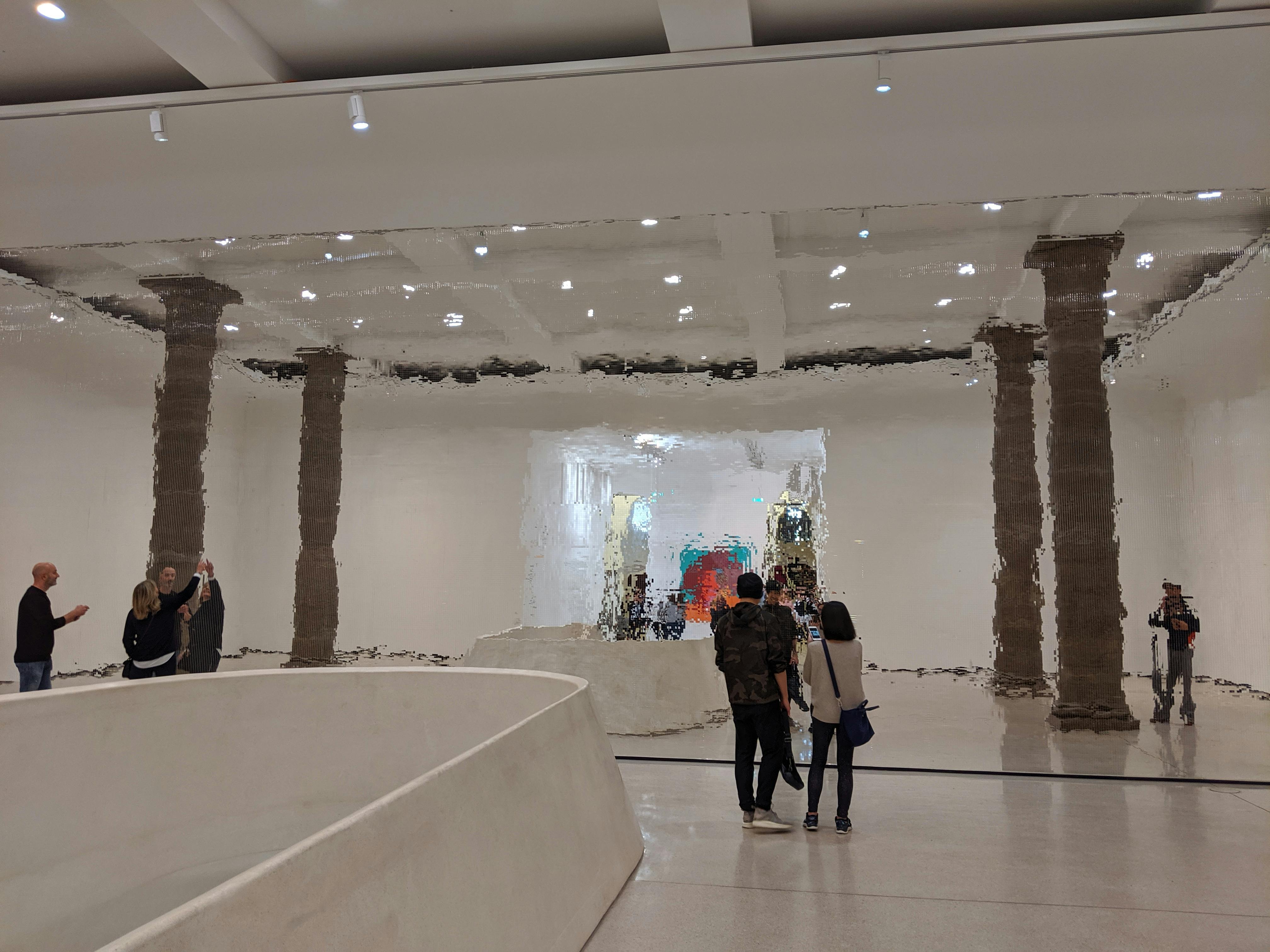
Consider what won. The Golden Lion for Best National Participation went to the Australia Pavilion for Archie Moore’s “kith and kin.” The work exists in chalk. Sixty-five thousand names, hand-chalked across the gallery floor, each one representing a connection across 10,000 years of Aboriginal genealogy. It’s labor-intensive in the most literal sense. It’s ephemeral. Not marble, not bronze, not gilt-edged credentials.

Moore’s work traces kinship. It maps relationship. It does something that much institutional art avoids: it centers care and connection over spectacle. And Venice’s most prestigious award recognized it. This wasn’t random curation. It was a statement about what the Biennale values moving forward.

That a work engaging Aboriginal knowledge systems received the award speaks volumes about where Pedrosa positioned the conversation. The precedent matters because it signals to artists from the Global South, from Indigenous communities, from regions outside the traditional Western art capital axis that their work doesn’t need to apologize for its perspective or its materials.

The Money Problem That Still Needs Solving

And yet. Because there’s always a yet. A 2025 report from the European Cultural Foundation documented something uncomfortable: national pavilion funding disparities remain stark and unforgiving. G7 nations average 2.1 million euros in pavilion budgets. Sub-Saharan African nations average 180,000 euros. That’s not a gap. That’s a chasm with institutional weight behind it.

Pedrosa’s curatorial vision expanded access in terms of representation. But it couldn’t solve the structural economic inequities that determine how pavilions function, how long artists can spend in Venice, what kind of documentation and promotion they can afford. An artist from Lagos and an artist from London both exhibiting at the 2024 Biennale faced radically different support systems.

This is where the 2026 edition inherits its real challenge. The legacy of “Stranieri Ovunque” includes this unresolved tension. Its success in bringing new voices to the table simultaneously exposed how much institutional infrastructure remains dependent on the old funding hierarchies. The question for incoming curators isn’t just who deserves to be heard. It’s who has the resources to be heard loudly enough to matter in the machinery of the art world that follows.

What Happened Next: The Acquisitions and the Shift

Here’s a measure of real institutional change: museums bought work. Serious museums. The Guggenheim and Tate Modern both released 2025 acquisition reports that directly cited the 2024 Venice edition as influencing 18 new collection purchases of artists from the Global South. That’s not metaphorical impact. That’s artists moving into permanent institutional collections because they were given the platform to be seen.

Collections are memory. They’re the art world’s archive. Once work enters a major permanent collection, its legitimacy calcifies. Curators cite it. Researchers study it. It becomes part of the narrative of contemporary art history. Pedrosa didn’t just curate an exhibition. He influenced which artists will be taught in art history courses a decade from now.

The 61st Venice Biennale, opening in April 2026 under new curatorial direction, doesn’t exist in isolation from this moment. It inherits a different conversation. Artists from regions that were historically marginalized now have a documented precedent that they were necessary, that they won the institution’s highest honors.

The Question Facing 2026 and Beyond

The real test isn’t whether the next Venice Biennale continues Pedrosa’s expansiveness. It’s whether the institution can deepen it. Can it move beyond the gesture of inclusion to the infrastructure of equity? Can it convince the funding bodies that Venice’s future depends on genuinely leveling the resources available to different nations?

What “Stranieri Ovunque” gave us was permission to imagine a different Venice Biennale. What comes next depends on whether enough people decide to fight for that imagination to become structural reality.

The AI Copyright Reckoning: What May 2025’s Policy Report Really Changes for Artists

When the Copyright Office Drew a Line

The US Copyright Office released its comprehensive AI and copyright policy report in May 2025, and what it said matters more than you might think if you’ve been watching this space nervously. The core conclusion? AI-generated works without meaningful human authorship remain ineligible for copyright protection. This isn’t a small administrative detail. This is the government officially saying: if a machine makes it mostly alone, it doesn’t get the legal shield that protects creative work.

But here’s where it gets interesting. The report didn’t just draw a line and walk away. It outlined a spectrum-based framework for evaluating human creative contribution in AI-assisted works. The Copyright Office is acknowledging something we already know from our own studios and creative practices: sometimes the computer is the brush, and sometimes it’s the canvas. The distinction matters. When you use Midjourney v6, Adobe Firefly, or DALL-E 3 as one tool among many in your creative process, the analysis gets complicated fast.

The Spectrum Between Tool and Replacement

Think about how painters have always used technology. A Renaissance artist used mirrors and camera obscura to trace proportions. Photographers embraced darkroom manipulation for decades. Digital painters adopted Photoshop and tablets. None of these technologies erased authorship because the human made intentional creative choices at every stage. The key word is intention.

The spectrum framework tries to capture this reality. On one end: you’re using AI as a generative starting point, then spending weeks of labor refining, compositing, repainting, and transforming the output until it barely resembles the initial prompt. That work likely qualifies for copyright protection because your human authorship is demonstrable and substantial. On the other end: you type a prompt, click generate, and publish the result unchanged. That’s different territory legally.

What makes this framework worth paying attention to isn’t just what it protects. It’s what it refuses to protect. The report addressed outputs from tools including Midjourney v6, Adobe Firefly, and DALL-E 3 specifically. By naming these systems, the Copyright Office sent a message: we’re not treating AI image generation as a black box. We’re looking at how these particular tools work, what control they give users, and what creative labor they actually require.

The Real Crisis: Income Displacement Right Now

Policy frameworks matter, but income matters more when you’re trying to pay rent. A 2025 survey by the Artists Rights Alliance found that 74% of professional visual artists reported lost income directly attributable to clients substituting AI-generated imagery for commissioned work. Three-quarters of working visual artists are already experiencing concrete financial harm.

This isn’t theoretical. A commercial illustrator I know just lost a contract she’d held for three years because the client decided to generate their social media graphics with DALL-E instead. A product designer watched his rate get undercut by a studio offering AI-assisted mockups at one-fifth the price. These are real people whose creative labor got replaced by efficiency, not innovation.

The National Endowment for the Arts reported in its 2024 annual survey that 61% of working artists expressed concern that AI tools would devalue their labor within five years, up from 38% in 2023. That’s a dramatic jump in just one year. Artists aren’t paranoid. They’re watching their market shift in real time and trying to figure out how to survive in it.

Training Data: The Unresolved Question That Matters Most

While the Copyright Office was settling questions about authorship and protection, a separate legal battle was gaining momentum. Getty Images’ lawsuit against Stability AI, filed in 2023, was still in active litigation as of early 2026, with the case expected to set binding precedent for training data licensing across the industry. This is the lawsuit that might actually change everything.

Here’s what Getty is asking: if Stability AI built their image generation tool by training on millions of Getty images without permission or compensation, does that constitute copyright infringement? The question sounds technical, but it cuts to something fundamental about creative fairness. Most image-generation AI systems trained on vast datasets pulled from the internet without explicit artist consent. The systems that generate novel images do so by learning patterns from existing work.

Think about how craft knowledge actually transfers. You learn to paint by studying paintings. You learn to compose photographs by looking at photographs. You build your eye over years, drawing inspiration from countless images you encounter. AI systems compress this learning process into code and math, potentially learning from your work specifically without your knowledge or compensation. Getty’s lawsuit is asking the courts to say whether that’s legally different from what human artists do naturally, and that distinction matters enormously for how this technology develops.

What Actually Changes for Your Practice

So what does all this mean for people making art right now? If you’re using AI tools as part of a hybrid creative process, the May 2025 report gives you some legal clarity. Document your process. Save iterations. Be able to articulate the specific human creative choices you made. This is good practice anyway if you care about your work, but now it has legal weight behind it.

If you’re competing with AI-generated imagery in the commercial marketplace, the landscape is rougher. Policy catches up slowly to technology. Even with copyright protection clarified, even as lawsuits work through the courts, clients will still choose cheaper options. Some of them will always choose cheaper options. That’s market pressure that policy can’t really address directly.

What we can do is keep making work that demonstrates why human creativity matters. Not because we’re more efficient or cheaper, but because we bring intention, specificity, and culturally embedded meaning that algorithmic pattern-matching can’t quite replicate. When you notice how a particular artist uses color temperature to create emotional resonance, or how a photographer’s compositional choices reference both classical painting and personal history, you’re noticing something the generative models still struggle with: coherent vision developed through singular human experience.

The US Copyright Office AI Policy Report is worth reading carefully if you work in visual art. Not because it solves everything, but because understanding the framework helps you know where you stand legally and helps you anticipate how the industry might shift. The real work, though, happens in your studio. That’s where you prove what human authorship actually means.

Color Field Painting Is Going Viral and the Art Establishment Is Panicking

The TikTok Effect Is Real and the Numbers Don’t Lie

Something wild is happening on TikTok. The hashtag #ColorFieldPainting has racked up over 870 million views in the past year. That’s not a typo. We’re talking about abstract art from the 1950s and 1960s—paintings with barely any recognizable imagery, just pure color and gesture—suddenly captivating millions of teenagers and twentysomethings who are supposed to be on social media for dancing and trend sounds.

The content? Creators showing studio process videos, walking through how you pour paint, how you let gravity do the work, how you sit with a canvas for hours watching colors bleed into each other. They’re name-dropping Helen Frankenthaler and Morris Louis like these artists invented the concept of being cool, which honestly, they kind of did. The Helen Frankenthaler Foundation saw its website traffic jump 212% between January 2025 and January 2026. That’s not a small bump. That’s a seismic shift in who’s paying attention.

Why This Is Actually Happening (And Why It Matters)

Here’s the thing nobody expected: abstract art is tactile in ways that social media is supposed to hate. It’s all process. It’s meditative. It’s the opposite of the quick-cut, high-energy content that algorithms supposedly reward. And yet people are eating it up because watching someone work with color, watching them make decisions about scale and saturation, is genuinely hypnotic. It’s ASMR for people who like art.

Golden Artist Colors reported a 40% jump in sales for their fluid acrylic line in 2025, and they directly attributed it to the Color Field renaissance happening on social platforms. Art supply stores that had pallets of these paints gathering dust are suddenly restocking. People are buying these supplies because they want to make what they’re seeing online. They want to understand it not just by looking, but by doing.

This isn’t gatekeeping anymore. It’s not something you had to travel to a museum in New York to encounter. It’s democratized. That terrifies some people in the traditional art world, and honestly, that reaction tells you everything about what was broken about access in the first place.

The Market Is Responding in Ways That Complicate Everything

Secondary market prices for mid-century Color Field works by artists like Sam Gilliam rose an average of 28% over the prior year. Let that sink in. The TikTok effect isn’t just cultural, it’s economic. Collectors are suddenly interested in artists who were overlooked for decades. There’s genuine discovery happening here. Sam Gilliam is getting attention in 2026 that should have happened in 1976.

But here’s where it gets messy. When the market starts moving, genuine enthusiasm gets tangled up with speculation. Are people buying Sam Gilliam because they connect with his exploration of color and form? Or are they buying because they’ve read that Color Field is the new thing and they want to get in early? Probably both. That ambiguity is uncomfortable for people who want art to be about pure aesthetic experience and nothing else. But art has always been about money too. We just pretend it isn’t.

Museums Are Playing Catch-Up

The Smithsonian American Art Museum is planning a 2026 exhibition on the legacy of the Washington Color School, the movement that centered around the Corcoran Gallery back in the 1960s. That’s not a coincidence. Museums are paying attention to what’s happening online because they want to stay relevant, but also because curators are recognizing that there’s real intellectual merit in revisiting this work with fresh eyes. These artists have something to teach us about color relationships, about how abstraction communicates emotion without representation. Those lessons didn’t get less true just because nobody was talking about them for 40 years.

What’s happening now is curators finally getting to answer the question: why was this work marginalized for so long? Part of it was gatekeeping. Part of it was the art market being controlled by people with specific tastes. Part of it was genuine historiographical gaps. The TikTok attention, weird as it is, is forcing the conversation.

The Question Nobody Wants to Ask Out Loud

Here’s what’s really bothering the establishment: if Color Field painting can go viral on TikTok, what does that say about the supposed objectivity of art criticism and curation? If teenagers can understand and appreciate Morris Louis without an academic lecture, were the gatekeepers actually gatekeeping taste, or just gatekeeping because they could?

The answer is complicated. Not everyone’s interpretation of a Color Field painting is equally sophisticated. Depth matters in art criticism. But it’s also not true that you need a degree in art history to have a genuine response to color relationships and spatial dynamics. Sometimes the simplest response, “I see this, and it makes me feel something,” is actually the most honest one.

What’s your experience been with Color Field painting? Have you come across these works online or in person? What drew you to them, or what turned you off? The real conversation is happening right now, across TikTok and museums and studios and galleries. The question of what Color Field painting means in 2026 isn’t something the art world gets to decide alone anymore. That’s worth sitting with.

The Slow Painting Revolution: Why Six-Figure Price Tags Are Following Artists Into the Studio

The Numbers Tell a Story About What We’re Hungry For

Walk into any major gallery right now and you’ll notice something shift in the room’s energy. The walls aren’t dominated by digital prints or algorithmic abstractions. Instead, they’re lined with representational oil paintings so meticulously rendered they seem to breathe. At Frieze Art Fair this year, something extraordinary happened: emerging artists working in what critics now call “slow painting” captured 41 percent of reported sales across mid-tier galleries. That’s not a trend. That’s a seismic shift.

The economics alone are fascinating. When Christie’s documented their 2025 Post-War and Contemporary sales, a clear pattern emerged. Paintings with studio process diaries attached to their provenance—works where collectors could literally trace the artist’s labor across months or years—sold for an average 23 percent premium over comparable pieces without that documentation. The market isn’t just buying paintings anymore. It’s buying evidence of time. It’s buying proof that human hands stayed engaged, that attention didn’t waver.

This matters because we’re living through the first moment in art history where slowness itself has become radical. When NFT transaction volume dropped 19 percent year-over-year during the same period that traditional painting sales in the under-$500,000 bracket grew 14 percent, something deeper than market correction was happening. Collectors were making a choice about what they believed art should be.

Slow Painting Isn’t New—It’s a Reclamation

Here’s what I found thrilling about the February 2025 panel at the College Art Association annual conference: fourteen presenting scholars weren’t arguing about whether slow painting matters. They were mapping its philosophical dimensions. The formalization of the term itself signals something important. We needed language to describe what was already happening in studios across Brooklyn, Los Angeles, and beyond.

But this is the thing that gets me every time I think about it. Slow painting isn’t a new invention. It’s a return. Rembrandt spent months on single canvases, scraping back layers, letting them dry, working into the cracks of paint the way you’d work into the cracks of a relationship. The Renaissance masters understood something we almost forgot during the rush toward instantaneous culture. Time is a material. Duration is a pigment.

What’s genuinely new is that collectors have decided to pay for that understanding again. The gallerists and curators championing these works aren’t selling speed-free art as a luxury good, though it certainly functions that way at auction. They’re selling a philosophy. They’re saying: in a world where everything moves too fast, where everything is disposable, here is something that took longer than you spent in relationships that dissolved. Here is a painting that took 300 hours of continuous labor. That weight matters.

When Cecily Brown’s Hands Moved Across Canvas for Eighteen Months

Let me tell you what happened in April when Cecily Brown’s solo exhibition opened at Gagosian New York. Twenty-two paintings. All sold within 48 hours of the preview. The largest canvas, worked continuously over eighteen months, fetched $4.2 million. That’s not a number that gets casual. That’s a number that changes conversations in living rooms and on collector panels.

What’s extraordinary about Brown’s work is that you can see the time in it. There’s no sleight of hand. The brushwork isn’t gestural posturing. It’s architectural. Layers build on layers, and somewhere deep in that accumulation, a kind of order emerges that couldn’t exist without the duration. She’s not painting quickly and pretending; she’s painting slowly and making meaning out of the slowness itself.

The sale didn’t surprise me because I’d been watching this shift accelerate across smaller galleries first. Younger collectors in their thirties and forties started gravitating toward artists who could document their process. They wanted proof of intention. They wanted to know that someone hadn’t generated a painting in a day because that would mean something different than someone spending eighteen months with the same canvas.

The Documentation Revolution: Process as Provenance

Here’s where this gets really interesting from a market perspective. The Christie’s data about studio process diaries commanding a 23 percent premium suggests something radical. Collectors are now valuing the artist’s internal experience as part of the work’s essential content. The diary isn’t supplementary. It’s foundational.

Think about what that means. For centuries, provenance meant ownership records. Chain of custody, museum exhibitions, publication history. Now? Now provenance includes the artist’s own documentation of their thinking. It includes photographs of the canvas mid-creation, journal entries about color decisions. The work doesn’t stand alone anymore. It sits within a context of visible labor.

This mirrors something that happened with textiles and fiber arts decades ago. Once those disciplines started being collected seriously, the documentation of technique became essential to understanding value. You couldn’t separate the weaving from its maker’s process. Slow painting is claiming that same territory. It’s saying: the painting is inseparable from the hands that made it, the time those hands spent, and the decisions documented along the way.

Why This Moment, Why Now

The cultural timing here is almost too perfect. We’re living through genuine burnout around acceleration. Social media has conditioned us to want everything immediately, and we’re starting to viscerally reject that conditioning. When you stand in front of a painting that took a year and a half to complete, something settles in your chest. You’re not consuming it. You’re entering it.

The 14 percent growth in mid-range painting sales while NFTs declined suggests this isn’t only about wealthy collectors. This is about people across different financial brackets making a deliberate choice to invest in objects that demand slowness. That’s a choice with philosophical weight.

What fascinates me most is how this movement refuses easy definition. It’s not anti-technology—plenty of slow painters use digital tools to plan their work. It’s not academic—many of the most exciting slow painters are working in abstraction or challenging representational traditions. It’s simply a reclamation of time as a meaningful aesthetic and economic category.

If you’ve found yourself lingering in front of paintings lately, really looking at brushwork and surface and the evidence of duration, you’re already inside this moment. The question becomes: what does it change in us when we decide that slowness is worth six figures? What permission are we giving ourselves when we admit that attention itself is an art form we’re desperate to recover?

Kara Walker’s 2025 Commission and Why Discomfort Remains the Point

The Silhouette Speaks Again

Kara Walker has done it again. In 2025, a major American cultural institution unveiled a new monumental silhouette installation by the artist, continuing a practice that has, for nearly three decades, forced viewers to reckon with America’s most violent histories. The work sprawls across architectural space in the way only Walker’s pieces can—taking up room, demanding attention, refusing to be ignored or aestheticized away.

If you know Walker’s work, you know what this means. You know the graphic intensity of her black paper cutouts. You know how she layers scenes of slavery, colonialism, and racial terror onto gallery walls and public spaces, creating images that feel both baroque and brutal. You know that her art does not comfort. It provokes. It questions the viewer’s gaze itself—what we choose to see, what we’re willing to witness, what we tell ourselves about looking.

And if you’ve followed her career, you understand that this new commission isn’t just another exhibition. It’s part of a long argument Walker has been making with American institutions about their relationship to difficult histories and who gets to tell them.

The Domino Sugar Factory Moment

Let’s rewind to 2014. Walker created “A Subtlety” at the abandoned Domino Sugar Factory in Brooklyn, a massive sphinx-like figure made of white sugar and looming against industrial brick. The installation was meant to be ephemeral, intentionally temporary. Yet over ten weeks, more than 130,000 people came to see it. The crowds were enormous. The conversations were fierce.

Here’s where it gets thorny. The piece explicitly references the sugar trade’s dependence on enslaved labor. The monumentality was deliberate. The whiteness was deliberate. The sphinx—that ancient riddle-keeper—was watching over a site where human suffering had been refined into profit. And yet the photographs. Oh, the photographs. Thousands of people posed in front of “A Subtlety” smiling, documenting their moment with the artwork, treating it as spectacle.

Walker didn’t shy away from this contradiction. Instead, she let it breathe. She knew that the discomfort of watching people consume Black trauma as Instagram content was itself part of the artwork’s meaning. The installation became a mirror held up to complicity, to how easily we all participate in aestheticizing pain when it’s been packaged as culture.

That tension never left her work. It lives in this new commission too.

Institutions Are Finally Talking About Scale

The timing matters. According to recent data from the Public Art Fund Current Projects, the global public art market reached an estimated 4.2 billion dollars in 2025, with institutional commissions surpassing private ones for the first time. Institutions are investing in monumental work. They’re commissioning artists to make statements at scale. The conversation about who gets that platform has never been more urgent.

Yet here’s the irony that keeps me up at night: even as institutions throw resources at public art, the collections themselves remain shockingly homogeneous. According to research from the Mellon Foundation Arts & Culture Research, works by Black American artists still represent only 6.3 percent of acquisitions at major encyclopedic museums despite years of stated diversity commitments. The gap between rhetoric and collection reality is enormous.

Walker’s new work exists in this space. It’s commissioned. It’s monumental. It’s undeniable. And it probably makes certain board members uncomfortable in exactly the way art should.

The Weight of Recognition Without Resolution

Walker has been recognized for decades. MacArthur Fellow in 1997. Skowhegan Medal in Painting and Sculpture in 2012. Her work is held in over 50 permanent museum collections worldwide. She is, by any measure, canonized.

And yet. And yet. The fact that we still need to have the conversation about whether institutions will adequately represent Black artists, about whether discomfort is being mistaken for progress, about whether commissioning a monumental work by a Black woman artist somehow balances out systematic exclusion—that tells us everything about where we actually are.

Walker’s new commission is both celebration and indictment. It celebrates that she’s here, creating at scale, in spaces that matter. It indicts the fact that this still needs to be celebrated as exceptional.

Why Monument-Scale Still Shakes Things

Monument-scale art has always been about claiming space. Literally occupying it. When Kara Walker makes a silhouette installation that towers above you, that expands across walls, that takes up the oxygen in a room, she’s doing something more than hanging work on a gallery wall. She’s asserting that these stories deserve architecture. They deserve permanence. They deserve the kind of attention we usually reserve for heroes and founders.

Except Walker’s monuments don’t heroize. They haunt. They implicate. They ask uncomfortable questions about who belongs in these spaces and why it took so long for them to get here.

The institution hosting this new commission has probably asked itself some hard questions. Good. That discomfort is where actual reckoning begins. Walker’s silhouettes have always understood that you can’t look away from a giant shadow stretched across a wall. You can’t ignore it. You can’t file it away. You have to stand there and feel something shift in how you understand American history and American art.

That’s the power Walker has wielded for nearly thirty years. This new work, unveiled in 2025, continues that practice. It sits in a lineage of monumental interrogation. It asks institutions to reckon with what they’re really saying when they commission difficult art.

What are you seeing in this moment for public art? Are you noticing monuments in your own city? Take a moment to really look at how your local institutions are reckoning with representation. The answers might surprise you, and probably should.

The $1.2 Million Question: What Happens When an Algorithm Sells Like a Masterpiece

October 2025: The Auction That Changed Everything

Picture this. October 2025. Sotheby’s. A gavel comes down on a work sitting right at the intersection of human intention and algorithmic processing, and suddenly a price tag of $1.2 million is attached to something that makes the art world pause. This wasn’t a Banksy. It wasn’t a forgotten Basquiat. It was a piece co-created using generative AI tools, and it sold. The debate that followed didn’t just ripple through galleries and studios. It crashed into museums, auction houses, and copyright offices like a wave that nobody quite knew how to swim in.

What matters here isn’t just that the sale happened. What matters is what it revealed. For years, people asked whether AI art could ever belong in the same conversation as human-made work. Now they’re asking something sharper: if it sells for millions, can we keep pretending it doesn’t deserve a serious answer?

The Artist Rights Problem: Training Data Isn’t Consent

Let’s zoom out for a second and talk about what’s actually bothering working artists. Early in 2025, the Artist Rights Alliance documented something striking. Over 10,000 working artists signed a petition demanding legal frameworks that would require disclosure when AI tools trained on copyrighted artworks are used to create commercially sold pieces. These aren’t fringe voices. These are painters, sculptors, photographers, and digital artists watching their lifetime of work become training fuel for systems that don’t ask permission and don’t share revenue.

Here’s the tension nobody wants to acknowledge: generative AI systems learn by analyzing millions of images. That learning includes copyrighted work by living artists who never agreed to have their brushstrokes, composition choices, and color theories fed into a machine to teach it how to make art. It’s the difference between inspiration (which is legal) and extraction (which might not be). A Renaissance painter studied countless predecessors. An AI system ingests them instantaneously at scale. That comparison breaks down fast.

The petition signals something important. These artists aren’t anti-technology. They’re pro-transparency. They want galleries and collectors to know what’s underneath the work they’re buying. They want the same disclosure you’d get if you bought a diamond and the jeweler had to tell you whether it was mined or lab-created. Right now, that disclosure doesn’t exist.

The Money Numbers: From Niche Experiment to $4.3 Billion Forecast

Money moves markets. According to Bloomberg Intelligence analysis completed in 2025, the AI art market was projected to reach $4.3 billion in global sales by 2027. That’s an astonishing jump from roughly $500 million in 2022. In five years, an eightfold expansion. Galleries see opportunity. Collectors see trend. Investors see asset class. But artists see what looks like a gold rush they didn’t build and might not survive.

The scale matters because it changes how we talk about this. When AI art is a curiosity, it’s a conversation. When it’s a multi-billion-dollar market, it’s an industry. Industries have regulations, insurance policies, and legal frameworks. They have established players and gatekeepers. Right now, that infrastructure doesn’t exist for AI art, and the gap between market momentum and legal clarity is becoming a chasm.

The Copyright Question: Human Authorship Still Counts

Here’s where law catches up to philosophy. In February 2025, the U.S. Copyright Office finalized its guidance on AI authorship, and the ruling was clear: purely AI-generated images with no sufficient human authorship remain ineligible for copyright protection. This isn’t academic. This directly affects how galleries value, insure, and sell AI work. If a piece can’t be copyrighted, what exactly are you buying when you purchase it? Ownership without protection is a strange proposition.

The Copyright Office drew a distinction that matters: if a human directs the process, makes meaningful creative decisions, and exercises genuine editorial judgment, that work can qualify for protection. The algorithm alone isn’t enough. You need human intention layered on top. This is where the October Sotheby’s sale gets interesting. Was the person guiding that generative process an artist making real decisions, or were they just setting parameters and letting the machine run? U.S. Copyright Office AI authorship guidance 2025 tries to answer this, but the answer lands differently depending on who you ask.

Refik Anadol and the Legitimization Question

Refik Anadol operates at the highest level of this conversation. His data sculpture “Echoes of the Earth” was acquired by MoMA in 2024 for a sum reported to exceed $500,000. He’s the figure everyone cites when this debate heats up. His work appears in major institutions. His sales validate AI as a serious artistic medium. But here’s what’s interesting about Anadol’s position: he’s become the institutional proof point. Collectors and galleries point to him the way they point to the Sotheby’s sale. “See? It’s legitimate.” Meanwhile, thousands of other artists creating AI-assisted work remain in the margins, and thousands more see their training data being used without compensation.

Anadol’s legitimacy doesn’t solve the system problem. It just shows us what success looks like at the top tier. You can visit Sotheby’s contemporary and digital art auction archive and trace the market trend, but what you won’t find there is a framework that protects the artists whose work trained the systems creating these pieces. One person’s breakthrough doesn’t fix the structural question.

What Actually Changes Now

We’re at an inflection point. The $1.2 million sale proves the market exists. The Copyright Office guidance proves the legal system is trying to keep up. The petition from 10,000 artists proves the ethical questions aren’t going away. But we still don’t have clear answers about attribution, revenue sharing, or disclosure standards. We have a booming market and a fragmented regulatory landscape. We have Refik Anadol in MoMA and thousands of unsigned artists wondering if their work helped get him there.

What I keep coming back to is that this tension is forcing conversations that needed to happen anyway. What is authorship? What is creativity? What do we owe to artists whose work becomes data? These are old questions wearing new clothes. The answers we develop now will shape how we value, protect, and commission art for decades. Worth paying attention to, regardless of whether the next algorithm-assisted piece sells for $1.2 million or nothing at all.