Category: Blog

The New York Gallery System Is Broken — And No One Wants to Admit It

The Myth of the Open Door

There is a lie that the New York gallery system tells itself, and it tells it so often that even its critics start to believe it. The lie is that galleries are meritocracies. That if you are good enough, persistent enough, talented enough, someone will notice. That the doors of Chelsea and the Lower East Side are open to anyone with a portfolio and a dream.

This is not true. It has never been true. And pretending otherwise is not just dishonest — it is damaging.

Empty white gallery space with stark lighting

I have watched talented artists — brilliant, rigorous, deeply committed artists — spend years circling the perimeter of this system, only to be told that their work is “not ready” or “too niche” or, my personal favorite, “difficult to place.” Meanwhile, galleries roll out MFA after MFA, fresh from Yale and RISD and Columbia, artists whose work is competent but rarely urgent, artists whose primary qualification is that they already belong to the network that feeds the gallery ecosystem.

The problem is not individual galleries. The problem is structural. The system itself is designed to reproduce existing power, not to discover new voices. And until we name that, nothing changes.

Follow the Money

Let us start with economics, because the gallery system is, above all else, a market. New York’s major galleries operate on margins that demand predictable sales. A gallery like Gagosian or Pace does not survive on surprise. It survives on brand recognition, on artist names that function like luxury goods, on collectors who return season after season expecting a certain kind of product on the walls.

This means the system is inherently conservative. Not politically — though it often is — but economically. Galleries cannot afford to take real risks. They can afford aesthetic risks, sure. They can show challenging work by artists who already have institutional backing, who have already been vetted by museums and biennials. But that is not risk. That is a confirmation bias dressed up in curatorial language.

Auction house interior with artwork displayed

The numbers tell the story. A 2019 study published in PLOS ONE found that 85% of artists represented by major New York galleries were white. Eighty-five percent. In a city where Black and Latinx residents alone make up over 50% of the population. This is not an accident. This is a system doing exactly what it was built to do.

The MFA Pipeline

One of the most insidious mechanisms of exclusion is the MFA pipeline. Graduate programs in the arts cost tens of thousands of dollars per year. Columbia’s MFA runs over $60,000 annually in tuition alone. Who can afford that? Not the working-class painter from Detroit. Not the sculptor working three jobs in Houston. The people who can afford these programs are, overwhelmingly, people who already have financial safety nets — which is to say, people who are already likely to have connections, cultural fluency in elite spaces, and the ability to spend years without selling work.

And then the galleries recruit from these programs almost exclusively. Why? Because the MFA system has already done the filtering for them. It has already selected for class, for race, for the ability to speak the right language about one’s practice. The gallery gets a pre-vetted product. The artist gets representation. And everyone pretends this is a meritocracy.

The Feedback Loop of Privilege

The gallery system does not exist in isolation. It is embedded in a larger network of museums, art fairs, biennials, and publications — all of which reinforce each other’s choices. A museum show validates an artist, which increases their market value, which makes galleries more willing to invest in them, which leads to more museum shows. The cycle is self-perpetuating.

This means that once you are inside, it is very hard to fall out. And once you are outside, it is very hard to break in. The system rewards proximity to power, and punishes distance from it.

Consider the role of art fairs. Frieze, Art Basel, The Armory Show — these are not democratic spaces. They are trade shows for the ultra-wealthy. A single booth at Frieze New York can cost upwards of $50,000. Only galleries with significant capital can participate, which means only galleries with significant capital get the visibility that comes with participation. The barrier to entry is not quality. It is money.

How Critics Are Complicit

And then there are the critics. I say this as someone who writes criticism: we are part of the problem. When we review shows at blue-chip galleries to the exclusion of everything else, we reinforce the same hierarchy. When we treat the Lower East Side and Chelsea as the entire universe of relevant art, we render invisible the artists working in Queens, in the Bronx, in Jersey City, in studios that no one with power has bothered to visit.

We write about what we are invited to see. We write about what arrives in our inboxes. And the galleries with the biggest PR budgets — the galleries that can afford to hire professional publicists — dominate our attention. This is not conspiracy. It is laziness. And it serves no one except the people who are already being served.

Gallery visitor examining artwork on white wall

The Cost of This Brokenness

When I say the system is broken, I do not mean it is merely unfair. I mean it is failing on its own terms. The gallery system is supposed to serve two functions: to support artists and to introduce the public to art. It is failing at both.

It is failing artists because it only supports a narrow slice of them — the ones who fit the market’s expectations, who have the right credentials, who make work that is legible to collectors trained to see art as an asset class. The artists who do not fit this mold, who are doing something genuinely unfamiliar, who are working in traditions that the gatekeepers do not recognize — these artists are left to fend for themselves. Many give up. The culture loses.

And the system is failing the public because it has made art into a luxury commodity accessible only to those who can afford it. Walk into a Chelsea gallery on a Saturday afternoon and tell me who you see. It is not the city. It is a very particular slice of the city, the slice with disposable income and cultural capital to burn.

What Would a Working System Look Like?

I am not naive enough to think that galleries will voluntarily dismantle themselves. But there are concrete steps that would make the system less broken:

1. Open submissions. Not every gallery needs to accept unsolicited portfolios, but more of them could. And I mean real open submissions, reviewed by real curators, not just a form that goes into a void. Some galleries already do this. Most do not.

2. Regional scouting. The New York gallery world acts as though nothing exists outside the five boroughs. Galleries could hire scouts — paid scouts — to visit communities and studios across the country. There is talent everywhere. You just have to bother to look.

3. Transparent pricing. The opacity of the art market is a tool of exclusion. When prices are hidden, negotiation happens behind closed doors, and collectors with inside knowledge get better deals than newcomers. Radical transparency would not solve everything, but it would be a start.

4. Revenue sharing. The standard gallery split is 50/50. In what other industry does an intermediary take half the revenue from the person who actually made the product? Galleries could explore alternative models — sliding scales, capped commissions, profit-sharing agreements that become more favorable to the artist over time.

5. Accountability. Galleries should publish their artist rosters and demographic data. Who are you representing? Who are you not representing? If your program is 90% white artists in a city that is not 90% white, you should have to explain that — not just to your conscience, but to your community.

FAQ

Isn’t the gallery system already changing? I see more diverse artists than I used to.

There has been a shift, yes. Since 2020, many galleries have made visible efforts to represent more Black, Brown, and Indigenous artists. Some of these efforts are sincere. Many are performative. The test is whether these artists remain represented in five years, whether they get solo shows and not just group placements, and whether the galleries have actually changed their internal structures — who is curating, who is selling, who is making decisions. Representation without structural change is just public relations.

What about artist-run spaces and collectives? Aren’t they an alternative?

They can be. Some of the most exciting work in New York right now is happening in artist-run spaces — DIY galleries, collective studios, pop-up exhibitions in borrowed buildings. These spaces are often more inclusive and more willing to take real risks. But they are also under-resourced, unstable, and often invisible to anyone outside their immediate communities. They are survival strategies, not solutions. The larger system still needs to change.

What can someone who is not in the art world do about any of this?

Pay attention to where you spend your money and your time. Visit galleries outside the main corridors. Buy work from emerging artists directly if you can. Support organizations that are doing the work of expanding access — places like the Alliance of Artists Communities, which advocates for residencies and support structures that serve artists from underrepresented backgrounds. Ask questions. When you walk into a gallery and every artist is white, notice it. Say something about it. The system will not change because it is shamed into changing, but shame is a start. Complacency is the enemy.

The Refusal to Be Patient

I am tired of being told that these things take time. I am tired of the language of patience, of gradualism, of waiting for the market to correct itself. The market does not correct itself. The market does what markets do: it concentrates power and wealth in fewer and fewer hands.

The New York gallery system is broken. It has been broken for a long time. And the people who are most harmed by that brokenness — the artists who are excluded, the communities that are rendered invisible, the audiences who are never given the chance to see work that might change their lives — do not have the luxury of waiting.

We need to stop pretending that the system works. We need to stop accepting the mythology of meritocracy. And we need to build something else — something that actually serves artists, serves the public, and serves the art that this city claims to love.

The Basque Challenge to the Global Art Machine: How Bilbao’s ‘Basque Futures’ Is Rewriting the Rules

The 300-Biennial Problem

There are over 300 biennials operating right now. Stop and sit with that number for a moment. Three hundred. When you picture the Venice Biennale or even Documenta, you imagine something rare and monumental. Instead, we’re living in a moment where biennials have become so ubiquitous that Terry Smith, the cultural critic, coined a term for what’s happening: “biennial fatigue.” Curators feel it. Collectors feel it. Artists definitely feel it. It’s the sensation that everything is starting to look the same, that the global circuit has created a homogenized visual language that flattens local context and regional specificity.

Into this exhausted landscape walks the Guggenheim Bilbao’s “Basque Futures” exhibition, which opened in January 2026. This isn’t just another biennial competing for international attention. It’s a deliberate counterargument. The show features 47 artists from the Basque Country and its diaspora, with a production budget of 3.2 million euros partly funded by the Basque regional government. The funding structure alone says something: this exhibition isn’t waiting for validation from the international art world. It’s building from within.

Regional Economics vs. Global Spectacle

Here’s what surprised me most when I started digging into the economics. A 2025 study published in the Journal of Cultural Economics found that regional art exhibitions generate 2.3 times more local economic multiplier effects than internationally-traveling blockbuster shows. Let that sink in. Those prestigious, globe-trotting exhibitions that everyone talks about? They’re actually less economically beneficial to their host communities than shows rooted in place.

The Guggenheim Bilbao understood this before the data confirmed it. The museum pulled 1.1 million visitors in 2024, its highest attendance since 2007. Even more telling, 60 percent of those visitors came from outside Spain. You don’t need to chase the international biennial circuit to draw a global audience. You need to make something so compelling, so rooted in authentic regional narrative, that people journey specifically to experience it. “Basque Futures” appears designed with exactly this philosophy. It’s not trying to be everywhere. It’s trying to be somewhere so powerfully that everywhere else has to pay attention.

When Institutional Pride Meets Curatorial Pressure

Miren Arzalluz is the director of the Palais Galliera in Paris and a Bilbao native. She’s written extensively about something that rarely makes it into mainstream art criticism: the tension between institutional pride in regional identity and the homogenizing pressure of global curatorial language. Most curators working within the international circuit face an unspoken rule set. There’s a certain vocabulary. A certain aesthetic consensus. Ways of contextualizing work that have become so normalized they feel inevitable rather than constructed.

What Arzalluz identifies, and what “Basque Futures” seems determined to challenge, is that this normalized language systematically marginalizes regional perspectives. When you have to translate everything into the grammar of the global art world to be taken seriously, something gets lost. Not something small. Something essential about how a place thinks, sees, and creates. The 47 artists in this exhibition weren’t selected to speak that global language. They were selected precisely for their refusal to flatten their work into it.

Basque Identity as Curatorial Act

This is where “Basque Futures” gets interesting as a philosophical proposition. Curating an exhibition around regional identity isn’t new. What’s different here is the scale of institutional backing and the explicit rejection of the biennial circuit’s logic. You can find information about the broader programming approach on the Guggenheim Bilbao Exhibition Programme, but the real innovation is conceptual. The museum is essentially asking: what if we stopped trying to be a node in the global network and started being a genuine center for something specific?

That distinction matters more than it might initially appear. Nodes are interchangeable. Centers are not. When you’re a node, you’re valued for your ability to facilitate circulation: artists flowing through, international attention flowing in, cultural capital flowing out. When you’re a center, you’re valued for depth. For the particular constellation of ideas, histories, and creative practices that cohere around a place and time.

The work in “Basque Futures” reflects this reorientation. Rather than surveying contemporary art practice through an international lens and selecting the Basque contributions that fit best, the exhibition reverses the gaze. It asks: what does contemporary art look like when Basque history, language, politics, and landscape are not background context but primary subject matter? How does sovereignty as lived experience reshape artistic practice? What does abstraction mean when your region has spent centuries negotiating visibility and self-determination?

The Tension That Produces Something Real

I keep returning to that detail about Miren Arzalluz and the productive tension she describes. “Basque Futures” isn’t pretending that tension doesn’t exist. It’s not claiming that regional identity and international relevance are perfectly compatible or that the two can exist without friction. Instead, it seems to treat that friction as generative. The pressure between local specificity and global circulation doesn’t flatten the work. It sharpens it.

You can trace similar conversations happening across curatorial practice right now. If you’re interested in how other institutions are approaching regional practice, e-flux Announcements on Regional Curatorial Practice often features emerging perspectives on these questions. But what distinguishes Bilbao’s approach is the refusal to apologize for choosing depth over breadth.

The real question “Basque Futures” poses isn’t whether regional exhibitions can compete with international biennials. It’s whether that competition is the right framework at all. What happens to art criticism, to curatorial thinking, to artistic development when we stop measuring success by international circulation and start measuring it by the depth of conversation within a place? What if the goal isn’t to send your artists everywhere but to create conditions where they can do their most rigorous work here?

The exhibition runs through the spring, and if you find yourself turning these questions over the way I do, staring at paintings, arguing about them over coffee, noticing how they change the way you look at everything else, I’d genuinely love to hear what strikes you about the work. What feels distinctly Basque? What feels universally human? And what happens in the space between those two questions?

Venice 2026 and the Ghost of ‘Stranieri Ovunque’: How One Curator’s Vision Permanently Altered Who Gets to Represent Nations

The Year Everything Changed at the Lagoon

Adriano Pedrosa stepped into the role of Venice Biennale curator in 2024 and did something that felt almost radical in its simplicity: he listened. Not to the usual institutional voices. Not to the established gatekeepers who’d been whispering the same names into the same ears for decades. He listened to artists, particularly those whose work had been systematically excluded from one of the art world’s most visible stages. The result was an edition titled “Stranieri Ovunque” – Foreigners Everywhere – and it cracked something open that doesn’t close easily.

Pedrosa’s appointment carried real weight as the first Latin American curator to helm the Biennale in its 130-year existence. That detail matters. It wasn’t performative diversity; it was a structural shift in power. And it fundamentally altered what the Venice Biennale could become in 2026 and beyond.

331 Artists, 86% Making Their Debut: The Numbers That Tell a Story

The 2024 edition featured 331 artists across its exhibition space. Most major exhibitions would stop there and consider it comprehensive. But here’s where the legacy truly lives: 86 percent of those artists had never shown at the Biennale before. Let that sink in for a moment. In an institution with more than a century of history, nearly nine out of every ten voices were new to the conversation. That’s the most expansive debut artist roster in the Biennale’s entire documented history.

This wasn’t diversity theater. This wasn’t tokenism wearing a linen blazer. This was a conscious dismantling of the assumption that the same names rotating through the same institutions somehow represent the totality of what contemporary art can be. Pedrosa essentially asked: what if we stopped assuming we already know who the important artists are?

The implications ripple outward. When La Biennale di Venezia Official Site opens its 2026 edition under a new curatorial vision, it will inherit a precedent that can’t be ignored. The institution has demonstrated that it can hold space for radically more voices. Walking backward now would require justification in a way it never did before.

Archie Moore’s Chalk and the Weight of Recognition

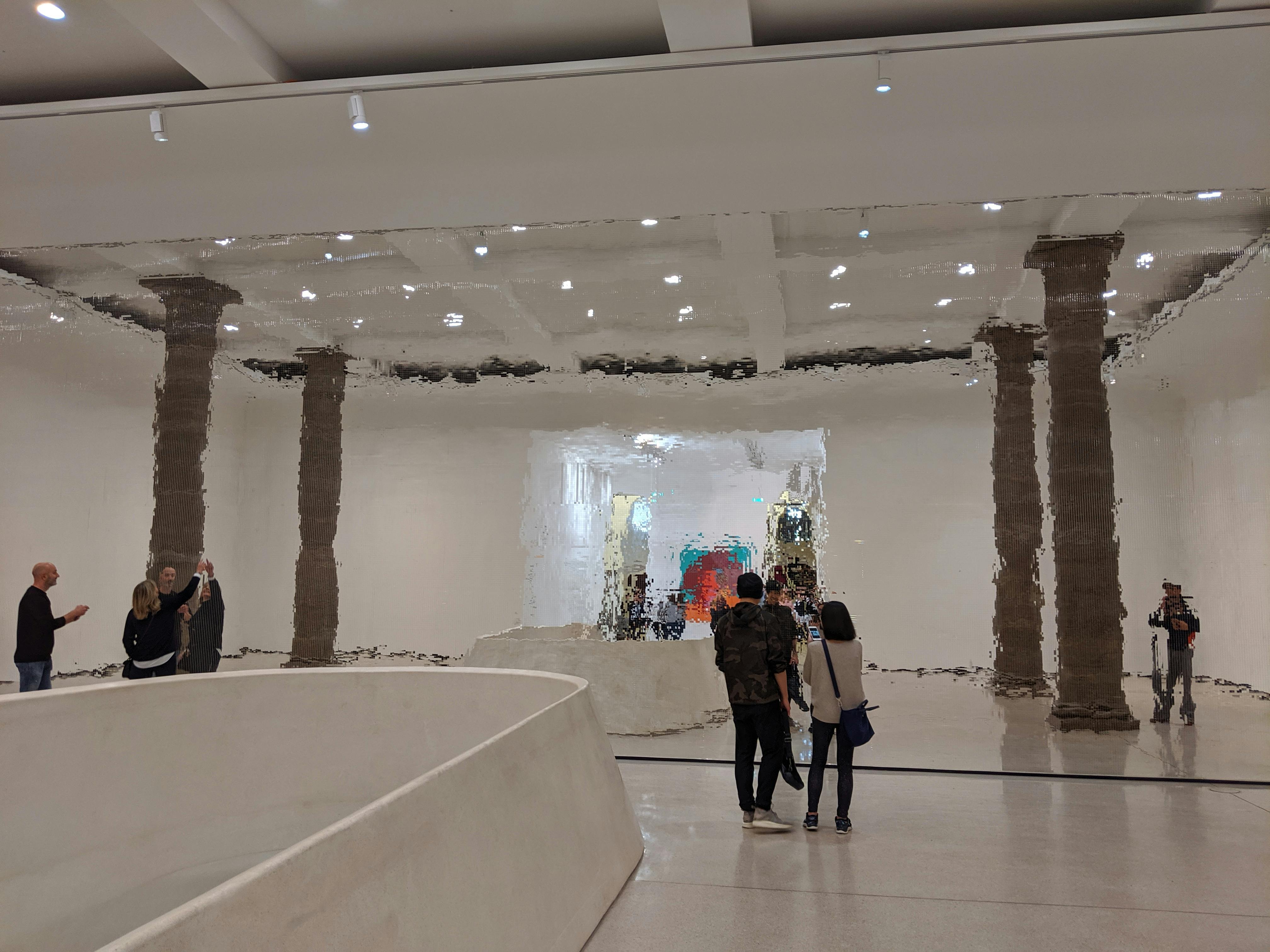
Consider what won. The Golden Lion for Best National Participation went to the Australia Pavilion for Archie Moore’s “kith and kin.” The work exists in chalk. Sixty-five thousand names, hand-chalked across the gallery floor, each one representing a connection across 10,000 years of Aboriginal genealogy. It’s labor-intensive in the most literal sense. It’s ephemeral. Not marble, not bronze, not gilt-edged credentials.

Moore’s work traces kinship. It maps relationship. It does something that much institutional art avoids: it centers care and connection over spectacle. And Venice’s most prestigious award recognized it. This wasn’t random curation. It was a statement about what the Biennale values moving forward.

That a work engaging Aboriginal knowledge systems received the award speaks volumes about where Pedrosa positioned the conversation. The precedent matters because it signals to artists from the Global South, from Indigenous communities, from regions outside the traditional Western art capital axis that their work doesn’t need to apologize for its perspective or its materials.

The Money Problem That Still Needs Solving

And yet. Because there’s always a yet. A 2025 report from the European Cultural Foundation documented something uncomfortable: national pavilion funding disparities remain stark and unforgiving. G7 nations average 2.1 million euros in pavilion budgets. Sub-Saharan African nations average 180,000 euros. That’s not a gap. That’s a chasm with institutional weight behind it.

Pedrosa’s curatorial vision expanded access in terms of representation. But it couldn’t solve the structural economic inequities that determine how pavilions function, how long artists can spend in Venice, what kind of documentation and promotion they can afford. An artist from Lagos and an artist from London both exhibiting at the 2024 Biennale faced radically different support systems.

This is where the 2026 edition inherits its real challenge. The legacy of “Stranieri Ovunque” includes this unresolved tension. Its success in bringing new voices to the table simultaneously exposed how much institutional infrastructure remains dependent on the old funding hierarchies. The question for incoming curators isn’t just who deserves to be heard. It’s who has the resources to be heard loudly enough to matter in the machinery of the art world that follows.

What Happened Next: The Acquisitions and the Shift

Here’s a measure of real institutional change: museums bought work. Serious museums. The Guggenheim and Tate Modern both released 2025 acquisition reports that directly cited the 2024 Venice edition as influencing 18 new collection purchases of artists from the Global South. That’s not metaphorical impact. That’s artists moving into permanent institutional collections because they were given the platform to be seen.

Collections are memory. They’re the art world’s archive. Once work enters a major permanent collection, its legitimacy calcifies. Curators cite it. Researchers study it. It becomes part of the narrative of contemporary art history. Pedrosa didn’t just curate an exhibition. He influenced which artists will be taught in art history courses a decade from now.

The 61st Venice Biennale, opening in April 2026 under new curatorial direction, doesn’t exist in isolation from this moment. It inherits a different conversation. Artists from regions that were historically marginalized now have a documented precedent that they were necessary, that they won the institution’s highest honors.

The Question Facing 2026 and Beyond

The real test isn’t whether the next Venice Biennale continues Pedrosa’s expansiveness. It’s whether the institution can deepen it. Can it move beyond the gesture of inclusion to the infrastructure of equity? Can it convince the funding bodies that Venice’s future depends on genuinely leveling the resources available to different nations?

What “Stranieri Ovunque” gave us was permission to imagine a different Venice Biennale. What comes next depends on whether enough people decide to fight for that imagination to become structural reality.

The AI Copyright Reckoning: What May 2025’s Policy Report Really Changes for Artists

When the Copyright Office Drew a Line

The US Copyright Office released its comprehensive AI and copyright policy report in May 2025, and what it said matters more than you might think if you’ve been watching this space nervously. The core conclusion? AI-generated works without meaningful human authorship remain ineligible for copyright protection. This isn’t a small administrative detail. This is the government officially saying: if a machine makes it mostly alone, it doesn’t get the legal shield that protects creative work.

But here’s where it gets interesting. The report didn’t just draw a line and walk away. It outlined a spectrum-based framework for evaluating human creative contribution in AI-assisted works. The Copyright Office is acknowledging something we already know from our own studios and creative practices: sometimes the computer is the brush, and sometimes it’s the canvas. The distinction matters. When you use Midjourney v6, Adobe Firefly, or DALL-E 3 as one tool among many in your creative process, the analysis gets complicated fast.

The Spectrum Between Tool and Replacement

Think about how painters have always used technology. A Renaissance artist used mirrors and camera obscura to trace proportions. Photographers embraced darkroom manipulation for decades. Digital painters adopted Photoshop and tablets. None of these technologies erased authorship because the human made intentional creative choices at every stage. The key word is intention.

The spectrum framework tries to capture this reality. On one end: you’re using AI as a generative starting point, then spending weeks of labor refining, compositing, repainting, and transforming the output until it barely resembles the initial prompt. That work likely qualifies for copyright protection because your human authorship is demonstrable and substantial. On the other end: you type a prompt, click generate, and publish the result unchanged. That’s different territory legally.

What makes this framework worth paying attention to isn’t just what it protects. It’s what it refuses to protect. The report addressed outputs from tools including Midjourney v6, Adobe Firefly, and DALL-E 3 specifically. By naming these systems, the Copyright Office sent a message: we’re not treating AI image generation as a black box. We’re looking at how these particular tools work, what control they give users, and what creative labor they actually require.

The Real Crisis: Income Displacement Right Now

Policy frameworks matter, but income matters more when you’re trying to pay rent. A 2025 survey by the Artists Rights Alliance found that 74% of professional visual artists reported lost income directly attributable to clients substituting AI-generated imagery for commissioned work. Three-quarters of working visual artists are already experiencing concrete financial harm.

This isn’t theoretical. A commercial illustrator I know just lost a contract she’d held for three years because the client decided to generate their social media graphics with DALL-E instead. A product designer watched his rate get undercut by a studio offering AI-assisted mockups at one-fifth the price. These are real people whose creative labor got replaced by efficiency, not innovation.

The National Endowment for the Arts reported in its 2024 annual survey that 61% of working artists expressed concern that AI tools would devalue their labor within five years, up from 38% in 2023. That’s a dramatic jump in just one year. Artists aren’t paranoid. They’re watching their market shift in real time and trying to figure out how to survive in it.

Training Data: The Unresolved Question That Matters Most

While the Copyright Office was settling questions about authorship and protection, a separate legal battle was gaining momentum. Getty Images’ lawsuit against Stability AI, filed in 2023, was still in active litigation as of early 2026, with the case expected to set binding precedent for training data licensing across the industry. This is the lawsuit that might actually change everything.

Here’s what Getty is asking: if Stability AI built their image generation tool by training on millions of Getty images without permission or compensation, does that constitute copyright infringement? The question sounds technical, but it cuts to something fundamental about creative fairness. Most image-generation AI systems trained on vast datasets pulled from the internet without explicit artist consent. The systems that generate novel images do so by learning patterns from existing work.

Think about how craft knowledge actually transfers. You learn to paint by studying paintings. You learn to compose photographs by looking at photographs. You build your eye over years, drawing inspiration from countless images you encounter. AI systems compress this learning process into code and math, potentially learning from your work specifically without your knowledge or compensation. Getty’s lawsuit is asking the courts to say whether that’s legally different from what human artists do naturally, and that distinction matters enormously for how this technology develops.

What Actually Changes for Your Practice

So what does all this mean for people making art right now? If you’re using AI tools as part of a hybrid creative process, the May 2025 report gives you some legal clarity. Document your process. Save iterations. Be able to articulate the specific human creative choices you made. This is good practice anyway if you care about your work, but now it has legal weight behind it.

If you’re competing with AI-generated imagery in the commercial marketplace, the landscape is rougher. Policy catches up slowly to technology. Even with copyright protection clarified, even as lawsuits work through the courts, clients will still choose cheaper options. Some of them will always choose cheaper options. That’s market pressure that policy can’t really address directly.

What we can do is keep making work that demonstrates why human creativity matters. Not because we’re more efficient or cheaper, but because we bring intention, specificity, and culturally embedded meaning that algorithmic pattern-matching can’t quite replicate. When you notice how a particular artist uses color temperature to create emotional resonance, or how a photographer’s compositional choices reference both classical painting and personal history, you’re noticing something the generative models still struggle with: coherent vision developed through singular human experience.

The US Copyright Office AI Policy Report is worth reading carefully if you work in visual art. Not because it solves everything, but because understanding the framework helps you know where you stand legally and helps you anticipate how the industry might shift. The real work, though, happens in your studio. That’s where you prove what human authorship actually means.

Color Field Painting Is Going Viral and the Art Establishment Is Panicking

The TikTok Effect Is Real and the Numbers Don’t Lie

Something wild is happening on TikTok. The hashtag #ColorFieldPainting has racked up over 870 million views in the past year. That’s not a typo. We’re talking about abstract art from the 1950s and 1960s—paintings with barely any recognizable imagery, just pure color and gesture—suddenly captivating millions of teenagers and twentysomethings who are supposed to be on social media for dancing and trend sounds.

The content? Creators showing studio process videos, walking through how you pour paint, how you let gravity do the work, how you sit with a canvas for hours watching colors bleed into each other. They’re name-dropping Helen Frankenthaler and Morris Louis like these artists invented the concept of being cool, which honestly, they kind of did. The Helen Frankenthaler Foundation saw its website traffic jump 212% between January 2025 and January 2026. That’s not a small bump. That’s a seismic shift in who’s paying attention.

Why This Is Actually Happening (And Why It Matters)

Here’s the thing nobody expected: abstract art is tactile in ways that social media is supposed to hate. It’s all process. It’s meditative. It’s the opposite of the quick-cut, high-energy content that algorithms supposedly reward. And yet people are eating it up because watching someone work with color, watching them make decisions about scale and saturation, is genuinely hypnotic. It’s ASMR for people who like art.

Golden Artist Colors reported a 40% jump in sales for their fluid acrylic line in 2025, and they directly attributed it to the Color Field renaissance happening on social platforms. Art supply stores that had pallets of these paints gathering dust are suddenly restocking. People are buying these supplies because they want to make what they’re seeing online. They want to understand it not just by looking, but by doing.

This isn’t gatekeeping anymore. It’s not something you had to travel to a museum in New York to encounter. It’s democratized. That terrifies some people in the traditional art world, and honestly, that reaction tells you everything about what was broken about access in the first place.

The Market Is Responding in Ways That Complicate Everything

Secondary market prices for mid-century Color Field works by artists like Sam Gilliam rose an average of 28% over the prior year. Let that sink in. The TikTok effect isn’t just cultural, it’s economic. Collectors are suddenly interested in artists who were overlooked for decades. There’s genuine discovery happening here. Sam Gilliam is getting attention in 2026 that should have happened in 1976.

But here’s where it gets messy. When the market starts moving, genuine enthusiasm gets tangled up with speculation. Are people buying Sam Gilliam because they connect with his exploration of color and form? Or are they buying because they’ve read that Color Field is the new thing and they want to get in early? Probably both. That ambiguity is uncomfortable for people who want art to be about pure aesthetic experience and nothing else. But art has always been about money too. We just pretend it isn’t.

Museums Are Playing Catch-Up

The Smithsonian American Art Museum is planning a 2026 exhibition on the legacy of the Washington Color School, the movement that centered around the Corcoran Gallery back in the 1960s. That’s not a coincidence. Museums are paying attention to what’s happening online because they want to stay relevant, but also because curators are recognizing that there’s real intellectual merit in revisiting this work with fresh eyes. These artists have something to teach us about color relationships, about how abstraction communicates emotion without representation. Those lessons didn’t get less true just because nobody was talking about them for 40 years.

What’s happening now is curators finally getting to answer the question: why was this work marginalized for so long? Part of it was gatekeeping. Part of it was the art market being controlled by people with specific tastes. Part of it was genuine historiographical gaps. The TikTok attention, weird as it is, is forcing the conversation.

The Question Nobody Wants to Ask Out Loud

Here’s what’s really bothering the establishment: if Color Field painting can go viral on TikTok, what does that say about the supposed objectivity of art criticism and curation? If teenagers can understand and appreciate Morris Louis without an academic lecture, were the gatekeepers actually gatekeeping taste, or just gatekeeping because they could?

The answer is complicated. Not everyone’s interpretation of a Color Field painting is equally sophisticated. Depth matters in art criticism. But it’s also not true that you need a degree in art history to have a genuine response to color relationships and spatial dynamics. Sometimes the simplest response, “I see this, and it makes me feel something,” is actually the most honest one.

What’s your experience been with Color Field painting? Have you come across these works online or in person? What drew you to them, or what turned you off? The real conversation is happening right now, across TikTok and museums and studios and galleries. The question of what Color Field painting means in 2026 isn’t something the art world gets to decide alone anymore. That’s worth sitting with.

The Slow Painting Revolution: Why Six-Figure Price Tags Are Following Artists Into the Studio

The Numbers Tell a Story About What We’re Hungry For

Walk into any major gallery right now and you’ll notice something shift in the room’s energy. The walls aren’t dominated by digital prints or algorithmic abstractions. Instead, they’re lined with representational oil paintings so meticulously rendered they seem to breathe. At Frieze Art Fair this year, something extraordinary happened: emerging artists working in what critics now call “slow painting” captured 41 percent of reported sales across mid-tier galleries. That’s not a trend. That’s a seismic shift.

The economics alone are fascinating. When Christie’s documented their 2025 Post-War and Contemporary sales, a clear pattern emerged. Paintings with studio process diaries attached to their provenance—works where collectors could literally trace the artist’s labor across months or years—sold for an average 23 percent premium over comparable pieces without that documentation. The market isn’t just buying paintings anymore. It’s buying evidence of time. It’s buying proof that human hands stayed engaged, that attention didn’t waver.

This matters because we’re living through the first moment in art history where slowness itself has become radical. When NFT transaction volume dropped 19 percent year-over-year during the same period that traditional painting sales in the under-$500,000 bracket grew 14 percent, something deeper than market correction was happening. Collectors were making a choice about what they believed art should be.

Slow Painting Isn’t New—It’s a Reclamation

Here’s what I found thrilling about the February 2025 panel at the College Art Association annual conference: fourteen presenting scholars weren’t arguing about whether slow painting matters. They were mapping its philosophical dimensions. The formalization of the term itself signals something important. We needed language to describe what was already happening in studios across Brooklyn, Los Angeles, and beyond.

But this is the thing that gets me every time I think about it. Slow painting isn’t a new invention. It’s a return. Rembrandt spent months on single canvases, scraping back layers, letting them dry, working into the cracks of paint the way you’d work into the cracks of a relationship. The Renaissance masters understood something we almost forgot during the rush toward instantaneous culture. Time is a material. Duration is a pigment.

What’s genuinely new is that collectors have decided to pay for that understanding again. The gallerists and curators championing these works aren’t selling speed-free art as a luxury good, though it certainly functions that way at auction. They’re selling a philosophy. They’re saying: in a world where everything moves too fast, where everything is disposable, here is something that took longer than you spent in relationships that dissolved. Here is a painting that took 300 hours of continuous labor. That weight matters.

When Cecily Brown’s Hands Moved Across Canvas for Eighteen Months

Let me tell you what happened in April when Cecily Brown’s solo exhibition opened at Gagosian New York. Twenty-two paintings. All sold within 48 hours of the preview. The largest canvas, worked continuously over eighteen months, fetched $4.2 million. That’s not a number that gets casual. That’s a number that changes conversations in living rooms and on collector panels.

What’s extraordinary about Brown’s work is that you can see the time in it. There’s no sleight of hand. The brushwork isn’t gestural posturing. It’s architectural. Layers build on layers, and somewhere deep in that accumulation, a kind of order emerges that couldn’t exist without the duration. She’s not painting quickly and pretending; she’s painting slowly and making meaning out of the slowness itself.

The sale didn’t surprise me because I’d been watching this shift accelerate across smaller galleries first. Younger collectors in their thirties and forties started gravitating toward artists who could document their process. They wanted proof of intention. They wanted to know that someone hadn’t generated a painting in a day because that would mean something different than someone spending eighteen months with the same canvas.

The Documentation Revolution: Process as Provenance

Here’s where this gets really interesting from a market perspective. The Christie’s data about studio process diaries commanding a 23 percent premium suggests something radical. Collectors are now valuing the artist’s internal experience as part of the work’s essential content. The diary isn’t supplementary. It’s foundational.

Think about what that means. For centuries, provenance meant ownership records. Chain of custody, museum exhibitions, publication history. Now? Now provenance includes the artist’s own documentation of their thinking. It includes photographs of the canvas mid-creation, journal entries about color decisions. The work doesn’t stand alone anymore. It sits within a context of visible labor.

This mirrors something that happened with textiles and fiber arts decades ago. Once those disciplines started being collected seriously, the documentation of technique became essential to understanding value. You couldn’t separate the weaving from its maker’s process. Slow painting is claiming that same territory. It’s saying: the painting is inseparable from the hands that made it, the time those hands spent, and the decisions documented along the way.

Why This Moment, Why Now

The cultural timing here is almost too perfect. We’re living through genuine burnout around acceleration. Social media has conditioned us to want everything immediately, and we’re starting to viscerally reject that conditioning. When you stand in front of a painting that took a year and a half to complete, something settles in your chest. You’re not consuming it. You’re entering it.

The 14 percent growth in mid-range painting sales while NFTs declined suggests this isn’t only about wealthy collectors. This is about people across different financial brackets making a deliberate choice to invest in objects that demand slowness. That’s a choice with philosophical weight.

What fascinates me most is how this movement refuses easy definition. It’s not anti-technology—plenty of slow painters use digital tools to plan their work. It’s not academic—many of the most exciting slow painters are working in abstraction or challenging representational traditions. It’s simply a reclamation of time as a meaningful aesthetic and economic category.

If you’ve found yourself lingering in front of paintings lately, really looking at brushwork and surface and the evidence of duration, you’re already inside this moment. The question becomes: what does it change in us when we decide that slowness is worth six figures? What permission are we giving ourselves when we admit that attention itself is an art form we’re desperate to recover?